
Follow Me On Social Media!
Creamy & Comforting Butternut Squash Soup: An Autumnal Essential.

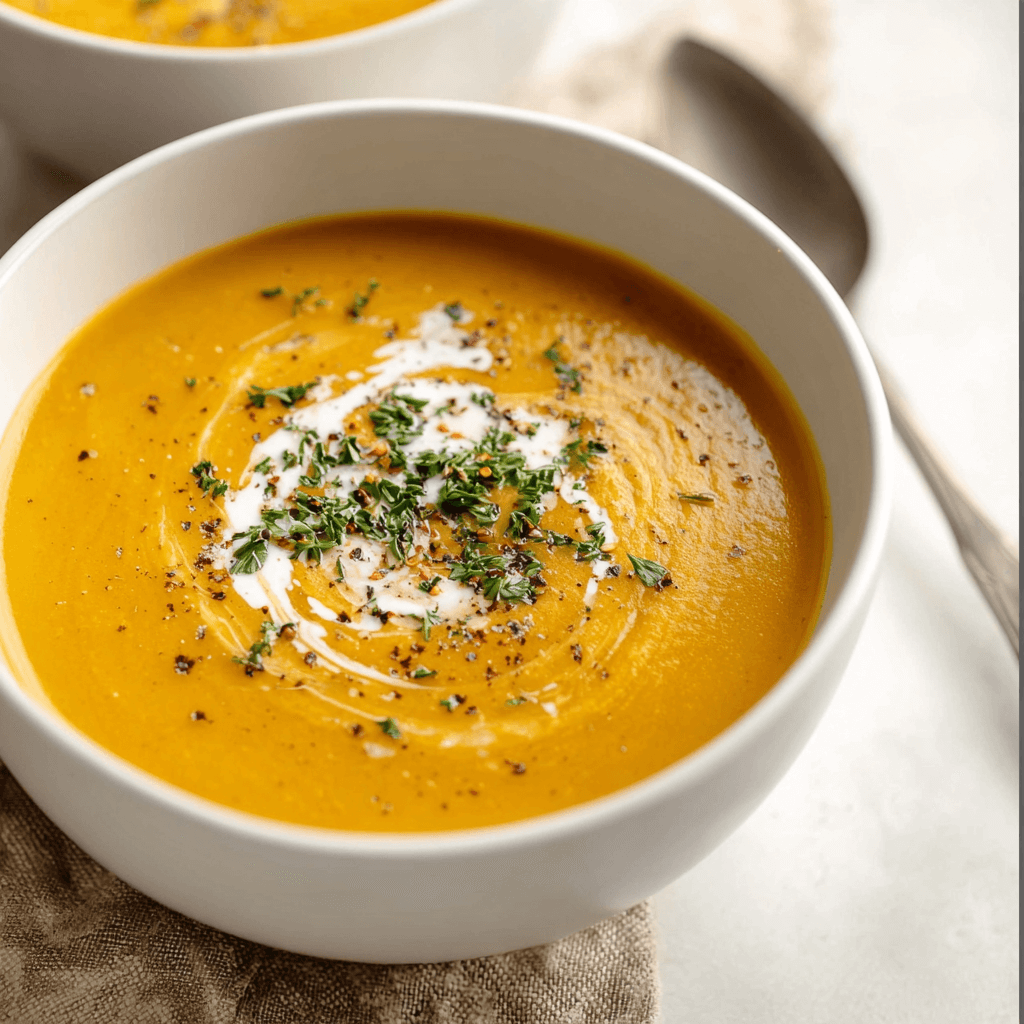
Butternut squash soup is the culinary equivalent of a warm blanket. It represents the transition into cooler months, offering a deep, earthy sweetness that is both nourishing and indulgent.1 While many soups rely on heavy cream for their texture, the beauty of butternut squash is its natural starchiness; when roasted and blended, it creates a velvety consistency that is remarkably rich without being heavy.2+1
This recipe prioritizes the roasting process. By caramelizing the squash and aromatics in the oven before they ever touch the stockpot, you unlock a complexity of flavor—notes of toasted nuttiness and honey—that boiling simply cannot achieve. It is an honest, reliable method that results in a soup with a vibrant orange hue and a soul-warming finish.
Ingredients
The Roasted Base
- 1 Medium Butternut Squash: (Approx. 1kg), peeled, seeded, and cubed.
- 1 Large Yellow Onion: Cut into wedges.
- 2 Large Carrots: Peeled and chopped into chunks.
- 4 Cloves Garlic: Left in their skins.
- 2 Tablespoons Extra Virgin Olive Oil.3
- 1/2 Teaspoon Sea Salt.
- 1/4 Teaspoon Black Pepper.
The Soup Liquid & Aromatics
- 1 Litre Vegetable or Chicken Stock: High quality.
- 1 Teaspoon Fresh Ginger: Grated.
- 1/2 Teaspoon Ground Nutmeg.
- 1/2 Teaspoon Dried Thyme.
- 100ml Full-Fat Coconut Milk or Heavy Cream: (Optional, for extra richness).
Instructions
1. The Roasting Phase
Preheat your oven to 200°C. On a large baking tray, toss the squash, onion, and carrots with olive oil, salt, and pepper. Nestled the unpeeled garlic cloves among the vegetables. Roast for 30 to 35 minutes, tossing halfway through, until the squash is tender and the edges are starting to turn golden brown.4
2. Squeeze the Garlic
Remove the tray from the oven. Once cool enough to handle, squeeze the roasted garlic out of its skin and into a large pot. The garlic will have transformed into a sweet, buttery paste.
3. Simmer with Aromatics
Add the roasted squash, onions, and carrots to the pot. Pour in the stock, ginger, nutmeg, and thyme. Bring the mixture to a gentle simmer over medium heat and let it cook for 10 minutes. This allows the flavors of the roasted vegetables to fully infuse into the liquid.
4. The Blend
Using an immersion blender, process the soup directly in the pot until it is completely smooth.5 If you prefer a thinner consistency, add a splash more stock. If using coconut milk or cream, stir it in now and simmer for another 2 minutes.
5. Final Seasoning
Taste the soup. Depending on the saltiness of your stock, you may need an extra pinch of salt. A squeeze of fresh lemon juice at this stage can also help brighten the deep, earthy flavors.
Flavor & Texture Notes
The primary sensation of this soup is velvety sweetness. The roasting process ensures the squash tastes like concentrated autumn, with a subtle toasted undertone.
The ginger and nutmeg provide a background warmth that lingers on the palate, while the roasted garlic adds a savory, mellow depth.6 The texture is thick and substantial, coating the back of a spoon with a silkiness that feels incredibly luxurious.
Tips & Variations
- The Spicy Kick: Add 1/2 teaspoon of red curry paste or a pinch of cayenne pepper during the simmering phase for a subtle heat.
- The Garnish: Elevate the presentation with a swirl of cream, a handful of toasted pumpkin seeds (pepitas), or a few fried sage leaves.7
- The Apple Twist: Roast one Granny Smith apple (peeled and cored) along with the vegetables to add a sharp, fruity acidity that cuts through the richness.
Storage & Make-Ahead
- Refrigeration: This soup is even better the next day. Store in an airtight container for up to 4 days.
- Freezing: This is a freezer-friendly recipe. It will keep for up to 3 months. Thaw overnight in the fridge and reheat gently on the stovetop.
- Make-Ahead: You can roast the vegetables a day in advance to save time on the evening you plan to serve the soup.
FAQ
Do I have to peel the squash before roasting?
While you can roast it in the skin and scoop it out later, cubing it first allows for more surface area to caramelize, which results in a deeper flavor.8
What if I don’t have an immersion blender?
A standard upright blender works perfectly. Just ensure you blend in small batches and leave the lid slightly cracked (covered with a towel) to allow steam to escape, preventing a “pressure pop.”
Can I make this vegan?
Yes. By using vegetable stock and coconut milk, this soup is naturally vegan and gluten-free without sacrificing any of the creamy texture.
Conclusion
Butternut squash soup is a masterclass in the power of roasting. By taking the extra time to caramelize your vegetables, you transform simple garden produce into a sophisticated, multi-layered dish. It is a foolproof recipe that delivers a consistent, high-impact result, making it the perfect staple for your cold-weather repertoire.