Follow Me On Social Media!
Classic Lasagna Bolognese: A Multi-Layered Italian Masterpiece.

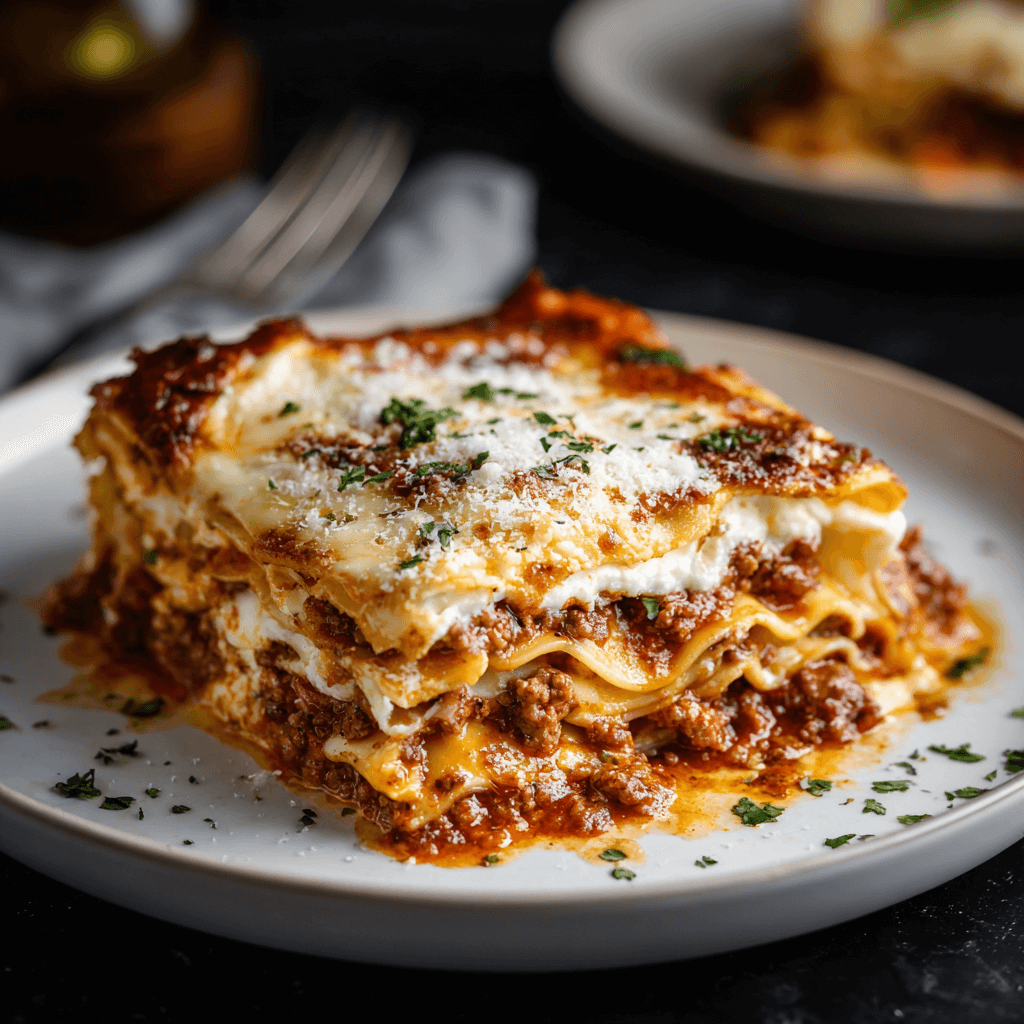
Classic Lasagna is a masterclass in slow-cooked depth and structural balance. This version follows the traditional “Bolognese” style, which layers a rich, meat-based ragù with a creamy béchamel or a seasoned ricotta mixture.1 The success of a great lasagna lies in the “rest period” after baking, which allows the layers to settle and the pasta to absorb the excess moisture, ensuring clean, defined slices.
The technical secret is the reduction of the sauce. By simmering the meat sauce for at least 45 minutes, you concentrate the sugars in the tomatoes and tenderize the beef, preventing the lasagna from becoming watery or “soupy.”
Ingredients
The Meat Sauce (Ragù)
- 500g Ground Beef: (80/20 lean-to-fat ratio for flavor).
- 250g Italian Sausage: Casing removed.
- 1 Large Onion: Finely diced.2
- 3 Cloves Garlic: Minced.
- 800g Crushed Tomatoes: High-quality canned tomatoes.
- 2 Tablespoons Tomato Paste.
- 1 Teaspoon Dried Oregano & 1 Teaspoon Dried Basil.
- 120ml Red Wine: (Optional, for depth).
The Cheese Filling
- 450g Ricotta Cheese.
- 1 Large Egg: (Acts as a binder for the cheese).3
- 50g Freshly Grated Parmesan.
- 1/2 Teaspoon Nutmeg: (The secret aromatic for Italian cheese fillings).
The Assembly
- 12–15 Lasagna Noodles: Pre-boiled or “no-boil” sheets.
- 400g Shredded Mozzarella.
- Fresh Parsley: For garnish.
Instructions
1. Simmer the Ragù
In a large pot, brown the ground beef and sausage over medium-high heat. Drain the excess fat. Add the onion and garlic, sautéing until translucent. Stir in the tomato paste, crushed tomatoes, wine, and herbs. Reduce heat to low and simmer, partially covered, for 45 to 60 minutes. Season with salt and pepper to taste.
2. Prepare the Ricotta Mixture
In a medium bowl, combine the ricotta, egg, grated Parmesan, and nutmeg. Whisk until smooth. The egg is crucial here; it prevents the ricotta from liquefying and “leaking” out of the layers when the lasagna is sliced.4
3. Boil the Pasta
If using standard noodles, boil in heavily salted water until 2 minutes shy of al dente. They will finish cooking in the oven by absorbing the sauce. If using no-boil noodles, ensure your sauce is slightly thinner (add 100ml of water to the ragù) to provide enough hydration.
4. Layering the Masterpiece
In a 23x33cm (9×13 inch) baking dish, spread a thin layer of meat sauce on the bottom.5 Build the layers in this specific order:
- Pasta Sheets (slightly overlapping).
- Ricotta Mixture (spread evenly).
- Meat Sauce.
- Mozzarella Cheese.Repeat for 3 to 4 layers, ending with a generous topping of mozzarella and Parmesan.
5. The Bake
Cover the dish tightly with foil (spray the underside of the foil with oil so the cheese doesn’t stick). Bake at 190°C for 25 minutes. Remove the foil and bake for another 15 to 20 minutes until the cheese is bubbly and has deep golden-brown spots.
6. The Essential Rest
Remove the lasagna from the oven and let it sit for 15 to 20 minutes before slicing. This is the most important step for structural integrity.
Flavor & Texture Notes
The primary sensation is savory, slow-simmered richness. The Italian sausage and red wine provide an earthy, complex undertone to the bright tomato acidity.
The texture is a contrast between the tender, chewy pasta and the creamy, molten cheese. The top layer of mozzarella should have a slight “snap” from the browning in the oven.
Tips & Variations
- The Spinach Boost: Squeeze all the water out of 300g of frozen spinach and mix it into the ricotta for a “Lasagna Verde” style.
- Vegetarian Swap: Replace the meat with roasted eggplant, zucchini, and sautéed mushrooms to maintain a hearty “umami” profile.
- Béchamel Version: For a more traditional Northern Italian style, replace the ricotta mixture with a thick white sauce made of butter, flour, and whole milk.6
Storage & Maintenance
- Refrigeration: Lasagna is notoriously better the next day. Store covered for up to 4 days.
- Freezing: You can freeze the entire assembled (unbaked) lasagna or individual baked slices for up to 3 months.7Thaw in the fridge for 24 hours before baking or reheating.
- Reheating: Reheat in the oven at 175°C covered with foil to prevent the cheese from drying out.8
FAQ
Why is my lasagna watery?
This is usually caused by not simmering the sauce long enough or using vegetables (like mushrooms) that haven’t been pre-sautéed to remove their moisture.
Do I have to use the egg in the ricotta?
While not strictly mandatory, the egg is the “glue.” Without it, the ricotta will grain out and the layers will slide apart when you try to serve a slice.
Can I make this ahead of time?
Yes. You can assemble the lasagna up to 24 hours in advance and keep it in the fridge. Just add 10 minutes to the covered baking time since the dish will be starting from a cold temperature.
Conclusion
Classic Lasagna is a reliable comfort food that rewards patience and proper layering. By focusing on a well-reduced meat sauce and allowing the dish to rest after baking, you ensure a professional result that is consistently flavorful.