Follow Me On Social Media!
Beef Empanadas Recipe: A Practical, Flavor-Focused Classic You’ll Want to Make Again.

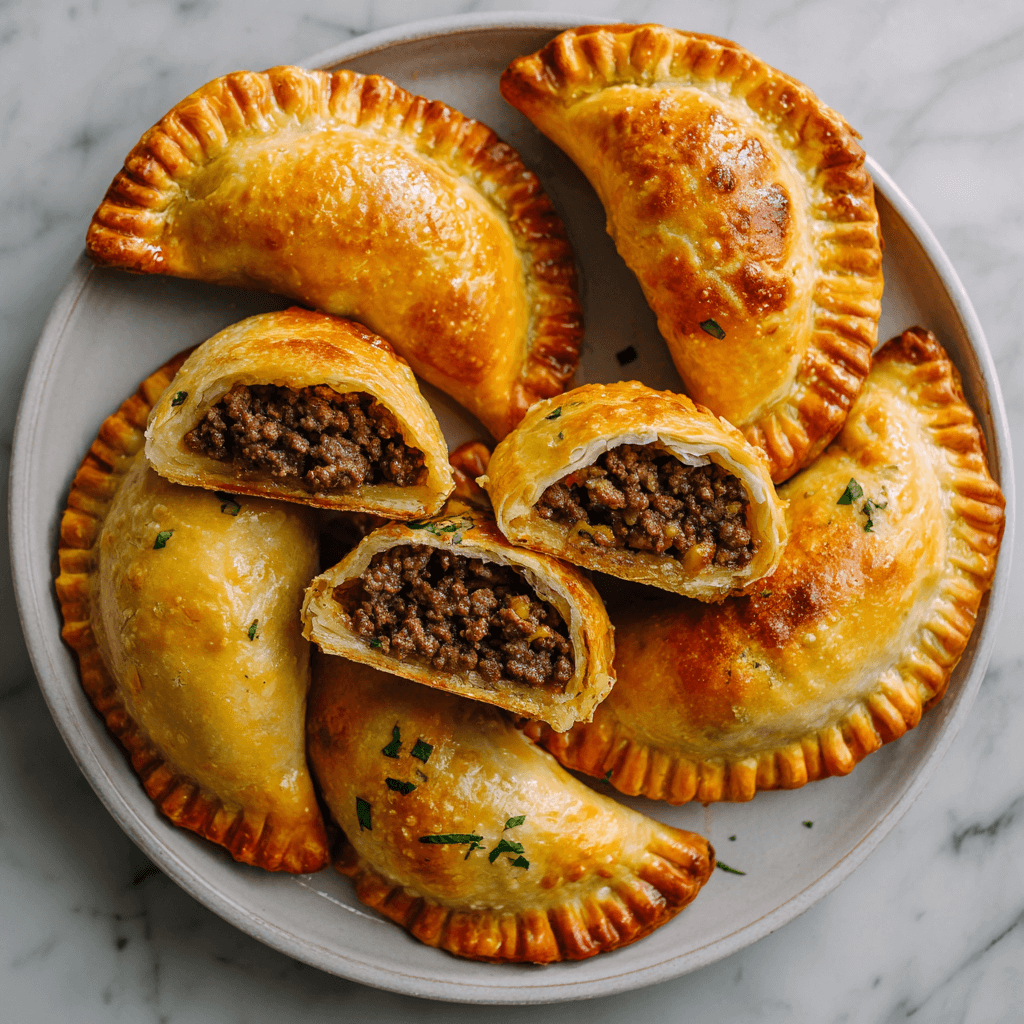
Beef empanadas are one of those recipes that feel deeply familiar even if you didn’t grow up eating them. They show up in many cuisines, each with its own small differences, but the idea stays the same: a savory filling wrapped in dough, baked or fried until golden, and eaten with your hands. They’re comforting, portable, and surprisingly versatile.
This beef empanadas recipe leans toward a balanced, everyday version—well-seasoned but not heavy, structured enough to hold together, and flexible enough to adapt to what you have on hand. The filling is savory and aromatic without being greasy, and the dough is sturdy but tender, designed to seal easily and bake evenly.
These empanadas work just as well for a family dinner as they do for meal prep, parties, or freezing for later. Once you’ve made them once, the process becomes familiar, and they quickly turn into a dependable option when you want something homemade that travels well.
Ingredients
This recipe makes about 12 medium empanadas. The ingredients are divided into the dough and the beef filling.
For the Empanada Dough
- 2 ½ cups all-purpose flour
- 1 teaspoon salt
- ½ cup unsalted butter, cold and cut into small cubes
- 1 large egg
- ⅓ cup cold water (plus more if needed)
For the Beef Filling
- 1 tablespoon olive oil
- 1 pound ground beef (85–90% lean works well)
- 1 small yellow onion, finely chopped
- 2 cloves garlic, minced
- 1 small red bell pepper, finely diced
- 1 teaspoon ground cumin
- 1 teaspoon smoked paprika
- ½ teaspoon dried oregano
- ½ teaspoon salt (adjust to taste)
- ¼ teaspoon black pepper
- 2 tablespoons tomato paste
- ¼ cup beef broth or water
- ¼ cup green olives, finely chopped (optional but traditional)
- 1 hard-boiled egg, finely chopped (optional)
For Assembly
- 1 egg, beaten (for egg wash)
Instructions
Make the Dough
In a large bowl, whisk together the flour and salt. Add the cold butter cubes and work them into the flour using your fingers or a pastry cutter until the mixture resembles coarse crumbs with a few pea-sized pieces remaining. This texture helps create a tender dough that doesn’t bake up tough.
In a small bowl, whisk together the egg and cold water. Pour this mixture into the flour and gently mix with a fork or your hands until a dough forms. If it feels dry, add a teaspoon of water at a time until it comes together.
Turn the dough onto a lightly floured surface and knead gently for about 1 minute, just until smooth. Avoid overworking it. Shape into a disc, wrap tightly, and refrigerate for at least 30 minutes. Resting the dough makes it easier to roll and improves texture.
Prepare the Beef Filling
Heat the olive oil in a large skillet over medium heat. Add the chopped onion and cook for 3–4 minutes until softened and lightly translucent. Add the garlic and diced bell pepper and cook for another 1–2 minutes, stirring frequently.
Add the ground beef to the pan and break it up with a spoon. Cook until browned and no longer pink, about 5–7 minutes. Drain excess fat if needed, but leave a small amount for flavor.
Stir in the cumin, smoked paprika, oregano, salt, and black pepper. Add the tomato paste and cook for 1–2 minutes to deepen its flavor.
Pour in the beef broth or water and stir to combine. Let the mixture simmer for 5 minutes, until most of the liquid has evaporated and the filling looks cohesive but not dry.
Remove from heat and stir in the chopped olives and hard-boiled egg if using. Taste and adjust seasoning as needed. Let the filling cool to room temperature before assembling the empanadas. A warm filling can soften the dough and make sealing difficult.
Assemble the Empanadas
Preheat the oven to 400°F (205°C). Line a baking sheet with parchment paper.
Divide the chilled dough into 12 equal pieces. Roll each piece into a ball, then flatten into a disc. Roll each disc out on a lightly floured surface into a circle about 5–6 inches in diameter.
Place about 2 tablespoons of beef filling in the center of each circle. Be careful not to overfill—too much filling makes sealing difficult and can cause leaks.
Fold the dough over the filling to form a half-moon shape. Press the edges together firmly, then crimp with a fork or fold the edge decoratively to seal. Transfer each empanada to the prepared baking sheet.
Brush the tops lightly with beaten egg. This helps create an even golden finish.
Bake
Bake the empanadas for 20–25 minutes, or until golden brown and crisp on the outside. Rotate the baking sheet halfway through for even browning.
Remove from the oven and let cool slightly before serving. The filling will be very hot straight from the oven.
Flavor & Texture Notes
These beef empanadas are structured and satisfying without feeling heavy. The dough bakes up crisp on the outside while staying tender enough to bite through easily.
The filling is savory and aromatic, with the beef providing richness and the spices adding warmth rather than heat. Tomato paste gives depth, while olives add a subtle briny note that cuts through the richness. The optional hard-boiled egg softens the filling and adds texture without overpowering it.
Together, the balance of dough and filling makes these empanadas filling without being greasy, and sturdy enough to hold in your hand.
Tips & Variations
If you’re short on time, store-bought empanada discs or pie dough can be used, but homemade dough offers better texture and flavor.
For a spicier version, add a pinch of chili flakes, cayenne, or finely chopped fresh chili to the filling.
Ground chicken or turkey can replace beef for a lighter version. Increase seasoning slightly to compensate for the leaner meat.
For a fried version, heat neutral oil to 350°F (175°C) and fry the empanadas in batches for 3–4 minutes per side until golden. Drain on paper towels.
You can also add raisins to the filling for a sweet-savory contrast, a common variation in some regions.
Storage & Make-Ahead
Empanadas are excellent for making ahead. You can assemble them fully and refrigerate, covered, for up to 24 hours before baking.
Baked empanadas keep well in the refrigerator for up to 3 days. Reheat in the oven at 350°F (175°C) until warmed through to restore crispness.
Unbaked empanadas freeze very well. Freeze them in a single layer until solid, then transfer to a freezer-safe container. Bake from frozen, adding 5–7 minutes to the baking time.
Serving Suggestions
Beef empanadas are satisfying on their own, but simple accompaniments elevate them into a full meal. Serve with chimichurri, salsa, or a simple yogurt-based sauce for dipping.
A crisp green salad with a light vinaigrette balances the richness nicely. For a more substantial spread, pair them with rice, roasted vegetables, or black beans.
They also work well as part of a larger appetizer table, since they’re easy to eat without utensils.
FAQ
Can I make the dough ahead of time?
Yes. The dough can be made up to 2 days in advance and stored in the refrigerator. Let it sit at room temperature for 10–15 minutes before rolling.
Why are my empanadas leaking?
Overfilling or not sealing the edges firmly enough can cause leaks. Make sure the filling is cool and the edges are pressed tightly.
Can I bake and freeze them?
Yes. Bake first, let cool completely, then freeze. Reheat in the oven until warmed through.
Are empanadas supposed to be crispy or soft?
Baked empanadas should be lightly crisp on the outside and tender inside. Fried empanadas will be crispier overall.
Can I make mini empanadas?
Absolutely. Roll the dough smaller and reduce the filling to about 1 tablespoon each. Bake time will be slightly shorter.
Conclusion
This beef empanadas recipe is built to be practical, flexible, and reliable. It doesn’t rely on complicated techniques or hard-to-find ingredients, yet it delivers something that feels complete and satisfying.
Once you’ve made them, you’ll likely find yourself adapting the filling, doubling the batch, or keeping a stash in the freezer for busy days. They’re the kind of recipe that quietly earns its place in your kitchen—simple, steady, and always welcome at the table.