Follow Me On Social Media!
Classic Carrot Cake Recipe: A Reliable, Well-Balanced Cake That Never Goes Out of Style.

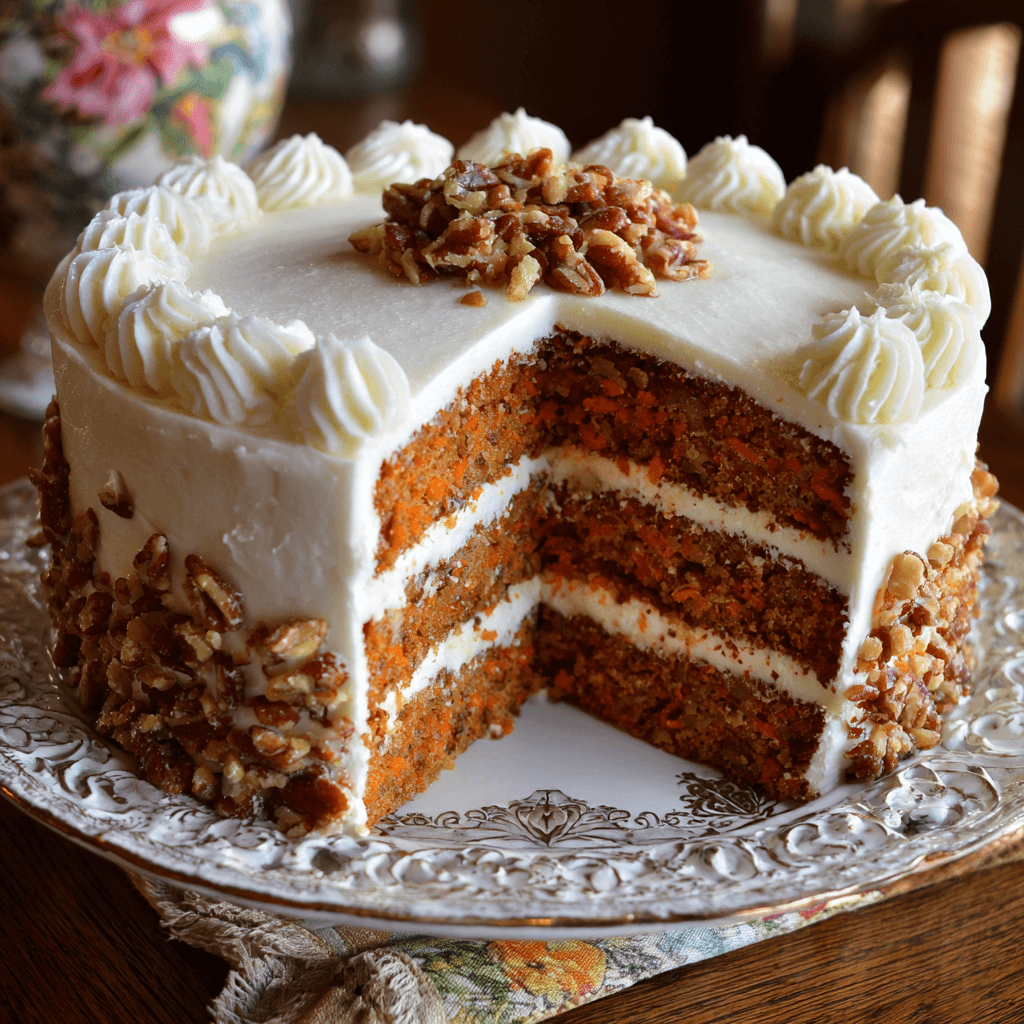
Classic carrot cake has managed to stay relevant for decades, not because it’s trendy, but because it’s dependable. It’s the cake people request for birthdays, holidays, and quiet weekends alike. Moist without being dense, gently spiced without tasting like a spice rack, and rich without relying on excess sugar, carrot cake strikes a rare balance that many desserts miss.
This recipe is built around those fundamentals. It doesn’t overload the batter with add-ins or lean on heavy frosting to do the work. Instead, it focuses on structure, moisture, and flavor that develops naturally from carrots, warm spices, and a thoughtfully mixed batter. The result is a cake that slices cleanly, keeps well, and tastes even better the next day.
If you’re looking for a classic carrot cake recipe that feels familiar, reliable, and worth repeating, this one fits that role comfortably.
Ingredients
This recipe makes one 9×13-inch sheet cake or two 9-inch round layers. Ingredients are divided into the cake and the cream cheese frosting.
For the Carrot Cake
- 2 cups all-purpose flour
- 2 teaspoons baking powder
- 1 teaspoon baking soda
- 1 teaspoon fine sea salt
- 2 teaspoons ground cinnamon
- ½ teaspoon ground nutmeg
- ¼ teaspoon ground ginger
- 1 cup granulated sugar
- ½ cup brown sugar, packed
- ¾ cup neutral oil (such as vegetable or canola oil)
- 4 large eggs, room temperature
- 2 teaspoons vanilla extract
- 3 cups finely grated carrots (from about 5–6 medium carrots)
Optional Add-Ins
- ½ cup chopped walnuts or pecans
- ½ cup raisins or crushed pineapple (well-drained)
For the Cream Cheese Frosting
- 8 ounces cream cheese, softened
- ½ cup unsalted butter, softened
- 2 cups powdered sugar, sifted
- 1 teaspoon vanilla extract
- Pinch of salt
Instructions
Prepare the Pan and Oven
Preheat the oven to 350°F (175°C). Grease and line your pan(s) with parchment paper. If using round pans, grease the sides thoroughly and lightly flour them for easier release.
Mix the Dry Ingredients
In a large bowl, whisk together the flour, baking powder, baking soda, salt, cinnamon, nutmeg, and ginger. Whisking evenly distributes the leavening and spices, which helps the cake rise evenly and avoids pockets of strong spice.
Mix the Wet Ingredients
In a separate large bowl, whisk together the granulated sugar, brown sugar, and oil until smooth. Add the eggs one at a time, whisking well after each addition. Stir in the vanilla extract.
The mixture should look glossy and slightly thickened. This step helps build structure before the flour is added.
Combine and Fold
Add the dry ingredients to the wet mixture in two additions, stirring gently with a spatula just until combined. Avoid overmixing, which can make the cake dense.
Fold in the grated carrots and any optional add-ins, distributing them evenly through the batter. The batter will be thick but pourable.
Bake
Pour the batter into the prepared pan(s) and smooth the top.
- For a 9×13-inch cake: bake for 40–45 minutes
- For two 9-inch round layers: bake for 28–32 minutes
The cake is done when a toothpick inserted into the center comes out clean or with a few moist crumbs.
Let the cakes cool in the pans for 10 minutes, then turn out onto a wire rack to cool completely before frosting.
Make the Cream Cheese Frosting
In a medium bowl, beat the softened cream cheese and butter together until smooth and creamy. Add the powdered sugar, vanilla, and salt, and beat until fully combined and smooth.
The frosting should be soft but spreadable. If it feels too loose, refrigerate it for 10–15 minutes before using.
Frost and Assemble
Once the cake is completely cool, frost the top of the sheet cake or assemble and frost the layered cake. Use an offset spatula for even coverage, keeping the frosting layer moderate rather than thick.
Flavor & Texture Notes
This classic carrot cake is moist without feeling heavy, thanks to the oil and natural moisture from the carrots. The crumb is tender and stable, making it easy to slice and serve cleanly.
The spices are present but measured. Cinnamon leads, while nutmeg and ginger sit quietly in the background, adding warmth rather than intensity. The carrots provide subtle sweetness and texture without making the cake taste vegetal.
The cream cheese frosting adds richness and contrast, lightly tangy and smooth, balancing the sweetness of the cake rather than overwhelming it.
Tips & Variations
Grate the carrots finely using the small holes of a box grater. Larger shreds can make the cake uneven and slightly stringy.
If using pineapple, drain it very well to avoid adding excess moisture to the batter.
For a slightly lighter texture, you can replace ¼ cup of oil with unsweetened applesauce. The cake will still be moist, though a bit less rich.
To make this cake dairy-free, use a dairy-free cream cheese and butter substitute. The cake itself contains no dairy.
For cupcakes, divide the batter into lined muffin tins and bake for 18–22 minutes.
Storage & Make-Ahead
Carrot cake keeps exceptionally well. Store frosted cake covered in the refrigerator for up to 5 days. Bring slices to room temperature before serving for the best texture.
Unfrosted cake layers can be wrapped tightly and frozen for up to 2 months. Thaw overnight in the refrigerator before frosting.
Because the flavor improves after resting, carrot cake is an excellent make-ahead dessert.
Serving Suggestions
Serve carrot cake at room temperature for the best flavor and softness. It pairs well with coffee, black tea, or lightly sweetened chai.
For a simple finish, sprinkle chopped nuts around the edges of the frosted cake or add a light dusting of cinnamon on top.
If you prefer less frosting, serve slices with a small spoonful of frosting on the side rather than fully frosted.
FAQ
Should carrot cake be refrigerated?
Yes, once frosted with cream cheese frosting, it should be refrigerated. Let slices sit at room temperature for 15–20 minutes before serving.
Can I make this cake without nuts or raisins?
Absolutely. This recipe stands well on its own without add-ins.
Why is my carrot cake dense?
Overmixing the batter or using too much flour can cause density. Measure flour carefully and mix just until combined.
Can I reduce the sugar?
You can reduce the total sugar by about ¼ cup without affecting structure too much, but the cake will be slightly less moist.
Does carrot cake taste better the next day?
Yes. The flavors deepen as the cake rests, making it even better after a day in the refrigerator.
Conclusion
This classic carrot cake recipe is built on balance rather than excess. It’s moist, gently spiced, and structured enough to feel reliable every time you bake it. Whether you keep it simple or add your own variations, it’s the kind of recipe that earns trust through consistency.
Once it becomes part of your rotation, you’ll understand why carrot cake has lasted as long as it has. It doesn’t chase trends—it just works, slice after slice.