Follow Me On Social Media!
Traditional Colonial Spoon Bread: The Soul of Southern Comfort.

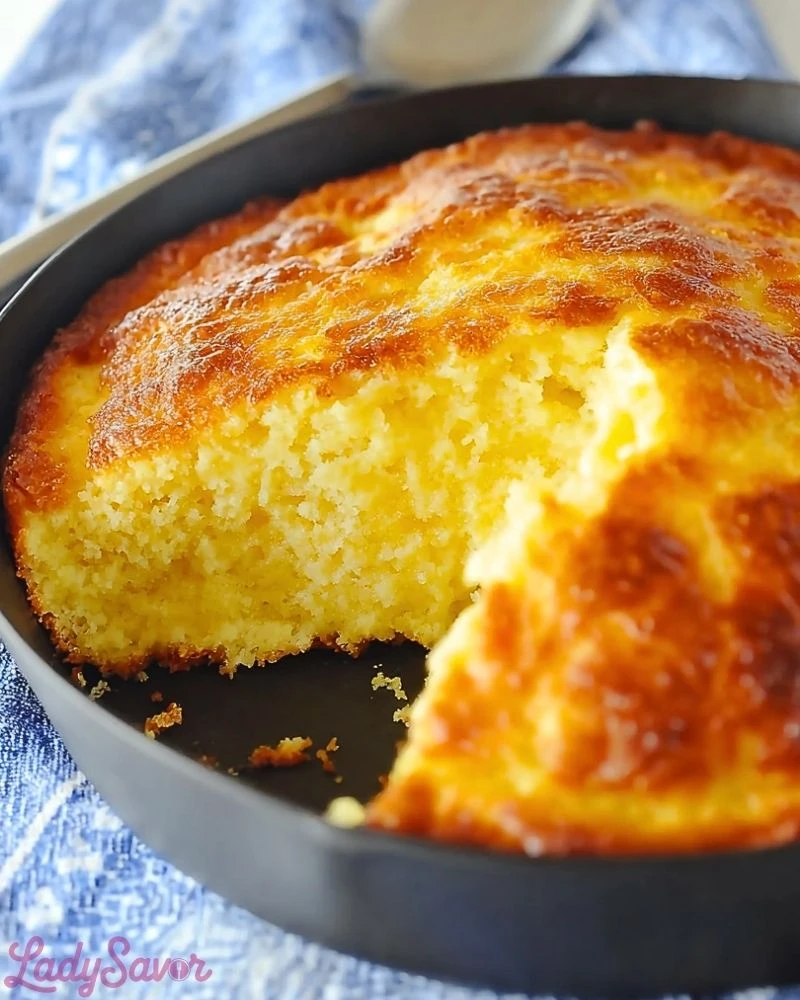
To understand spoon bread is to understand a specific era of American culinary history. Neither a standard cornbread nor a true souffle, spoon bread sits in a category all its own. It is a dish that dates back to the colonial era, evolving from indigenous corn mushes into a refined, airy side dish that graced the tables of Virginia and the Carolinas.1 While cornbread is something you can pick up with your hands, spoon bread—as the name implies—is so remarkably soft and custard-like that it must be served with a spoon.2+1
In many historic homes, this was the centerpiece of a Sunday dinner. It feels elegant because of its height and lightness, yet it remains rooted in humble ingredients like cornmeal, milk, and eggs. This recipe captures that specific “pudding-like” interior and golden, slightly crusty top that has made it a staple for centuries.
Ingredients for Authentic Spoon Bread
The secret to a great spoon bread is the quality of the cornmeal. For a truly authentic texture, look for stone-ground yellow cornmeal, which provides a more robust flavor and a better “bite” within the soft custard.
- Whole Milk: 2 cups.3 Using whole milk is non-negotiable for the creamy texture.
- Yellow Cornmeal: 1 cup, preferably stone-ground.
- Unsalted Butter: 3 tablespoons, plus extra for greasing the dish.
- Eggs: 3 large, separated.4 You will use the yolks for richness and the whites for lift.
- Baking Powder: 1 teaspoon, to assist with the rise.
- Salt: 1 teaspoon.
- Granulated Sugar: 1 tablespoon (optional, but helps balance the earthy corn flavor).
- Ground Nutmeg: A tiny pinch. This is a classic colonial addition that adds a subtle warmth.
Step-by-Step Instructions
Preparation and the Cornmeal Base
Preheat your oven to 375°F (190°C). Generously grease a 1.5-quart soufflé dish or a deep baking dish with butter. Unlike a flat casserole, spoon bread needs depth to rise properly.5
In a medium saucepan, bring the milk to a gentle simmer over medium heat. Do not let it come to a rolling boil. Once simmering, slowly whisk in the cornmeal in a steady stream. Continue to whisk constantly for 2 to 3 minutes. The mixture will thicken rapidly into a smooth, heavy porridge. Once it reaches this stage, remove it from the heat.
Incorporating the Enrichments
Stir the 3 tablespoons of butter into the hot cornmeal mixture until melted. Add the salt, baking powder, sugar, and nutmeg.
In a small bowl, lightly beat the 3 egg yolks. Temper the yolks by adding a spoonful of the warm cornmeal mixture into the eggs, stirring quickly, then pour the egg mixture back into the saucepan. This prevents the eggs from scrambling. Stir until the base is smooth and pale yellow. Let this mixture cool slightly while you handle the egg whites.
The Aeration Process
In a clean, dry bowl, beat the 3 egg whites until they form stiff peaks. They should be glossy and stand up straight when you lift the whisk.
Using a rubber spatula, gently fold about a third of the egg whites into the cornmeal base to lighten it up. Then, very carefully fold in the remaining whites. You want to see some white streaks; over-mixing will deflate the air you’ve just worked in, resulting in a heavy bread rather than a light spoon bread.
Baking to Perfection
Pour the batter into your prepared dish. Bake for 30 to 40 minutes. The spoon bread is finished when the top is a deep golden brown, the edges are pulled away slightly from the sides, and the center is set but still has a slight “jiggle” when moved.
Flavor and Texture Notes
Spoon bread is a study in texture. The top layer is a thin, crisp crust that shatters slightly under the spoon. Beneath that is a cloud-like, savory custard. It tastes intensely of toasted corn and sweet milk, with a very faint, woody undertone from the nutmeg.
It isn’t as sweet as a modern corn muffin; instead, it leans into the savory, buttery profile that makes it a perfect companion to salty meats. The interior should be moist enough that it almost feels like a savory bread pudding.
Tips and Variations
- The Cheese Addition: While not strictly traditional to the colonial era, folding in 1/2 cup of sharp cheddar cheese or Gruyère adds a wonderful depth of flavor.
- Corn Kernels: For added texture, fold in 1/2 cup of fresh or frozen corn kernels along with the egg yolks.
- Spice it Up: A finely diced jalapeño or a pinch of cayenne pepper can provide a modern, spicy kick to this historic dish.
- Make it Savory: Add a tablespoon of chopped fresh chives or green onions to the batter for a more herbal profile.
Storage and Make-Ahead
- Serving Immediately: Spoon bread is famous for falling slightly as it cools, much like a soufflé.6 It is at its absolute best the moment it leaves the oven.
- Leftovers: If you have leftovers, store them in the refrigerator for up to 2 days. While it won’t regain its airy height, it remains delicious. Reheat it in a 350°F oven, covered with foil, until warmed through.
- Prepping Ahead: You can make the cornmeal porridge base up to 4 hours in advance. Keep it covered at room temperature, then whisk in the yolks and fold in the whipped whites just before baking.
Serving Suggestions
In the South, spoon bread is often served right out of the baking dish as a side to a main protein.7
- With Country Ham: The saltiness of cured ham is the perfect foil for the creamy, mild corn flavor.
- A Lake of Butter: It is traditional to serve each portion with a small indentation in the middle filled with a pat of melting butter.
- Honey or Molasses: If you prefer a sweeter experience, a drizzle of local honey or sorghum molasses takes this into dessert territory.
- With Greens: Serve a scoop alongside slow-simmered collard greens or kale; the spoon bread acts as a perfect sponge for the “pot likker” (the flavorful broth from the greens).
FAQ
Why did my spoon bread collapse?
A slight dip in the center as it cools is completely normal. However, if it deflates significantly, it usually means the egg whites weren’t beaten to stiff peaks or they were folded in too vigorously. Treat it with the same gentleness you would a chocolate soufflé.
Can I use white cornmeal instead?
Yes. White cornmeal was actually very common in the colonial South.8 It has a slightly more delicate, floral flavor compared to the more robust, nutty flavor of yellow cornmeal.
Can I bake this in a cast-iron skillet?
You can, though it won’t rise as high as it would in a narrower, deeper dish. If using a skillet, reduce the baking time by about 5 to 10 minutes and enjoy the extra-crispy edges that the iron provides.
Conclusion
Colonial spoon bread is a reminder of the elegance that can be found in simple, pantry-staple ingredients. It is a conversation piece as much as it is a side dish, bringing a bit of history to the modern dinner table. Whether you are serving it with a holiday roast or a simple weekday chicken, its unique texture and comforting warmth make it a recipe worth preserving.