Follow Me On Social Media!
The Ultimate Cozy Salmon Chowder: A Rich and Hearty One-Pot Meal.

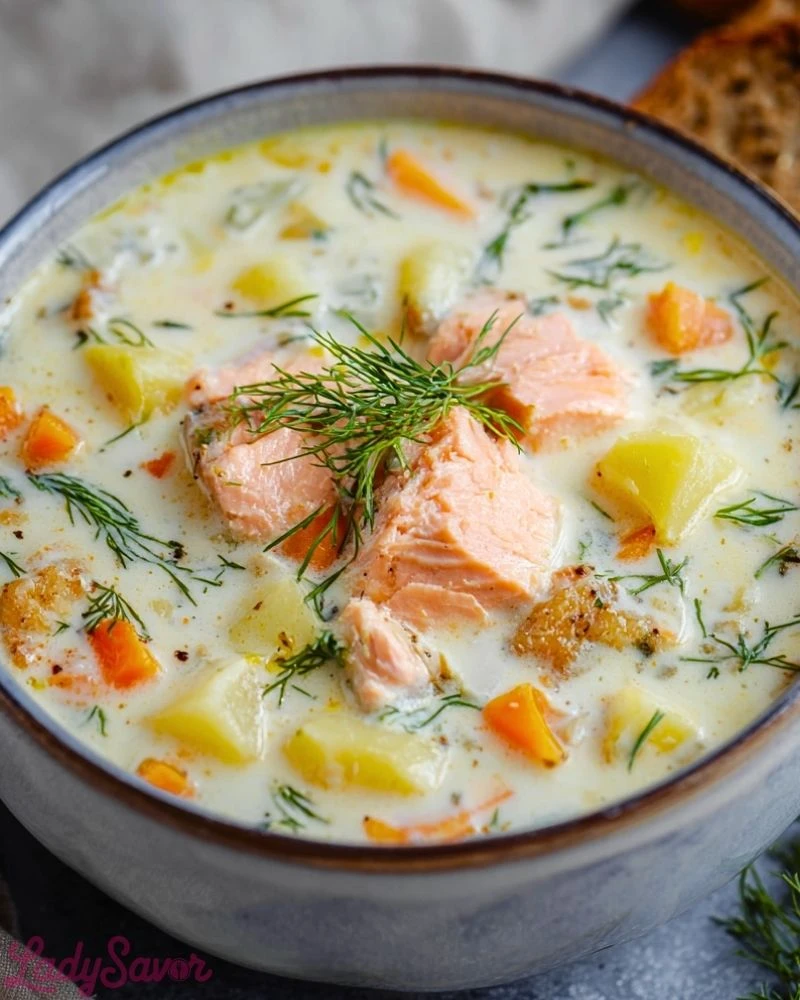
When the temperature drops and the evenings turn dark early, there is a specific kind of craving that only a bowl of thick, creamy soup can satisfy. While clam chowder often gets the spotlight in coastal towns, salmon chowder is its slightly more sophisticated, richer cousin. It is a dish that feels both rustic and luxurious, combining the flaky, oily richness of fresh salmon with the earthy comfort of potatoes and leeks.
This recipe is built on the philosophy that a good chowder should be substantial enough to stand as a full meal. We aren’t looking for a thin broth here; we want a velvety, golden base that hugs the ingredients. Whether you are using wild-caught fillets or high-quality leftovers from the night before, this salmon chowder is a reliable way to bring a sense of warmth and coastal charm to your dinner table.
Ingredients for the Perfect Chowder
The key to a successful chowder is the layering of fats and aromatics. Using a mix of butter and heavy cream ensures the base is decadent, while fresh herbs keep it from feeling overly heavy.
- Fresh Salmon: 1 to 1.5 pounds, skin removed and cut into 1-inch chunks.
- Unsalted Butter: 4 tablespoons.
- Leeks: 2 large, white and light green parts only, thinly sliced. Leeks provide a milder, sweeter base than standard onions.
- Celery: 2 stalks, finely diced.1
- Garlic: 3 cloves, minced.
- Potatoes: 1.5 pounds (about 3–4 medium), peeled and cubed. Yukon Gold potatoes are ideal because they hold their shape but have a naturally buttery texture.2
- Chicken or Seafood Stock: 4 cups.
- Heavy Cream: 1 cup.
- Dry White Wine: 1/4 cup (like a Sauvignon Blanc or Pinot Grigio) to deglaze the pan.
- Fresh Dill: 2 tablespoons, chopped.
- Fresh Parsley: 2 tablespoons, chopped.
- Old Bay Seasoning: 1 teaspoon (or a pinch of smoked paprika for a hint of woodsy flavor).
- Salt and Black Pepper: To taste.
- Fresh Lemon: 1 half, for a final squeeze of brightness.
Step-by-Step Instructions
Sautéing the Aromatics
In a large Dutch oven or a heavy-bottomed pot, melt the butter over medium heat. Add the sliced leeks and celery. Sauté for about 5 to 7 minutes until the leeks are soft and translucent, being careful not to let them brown. Stir in the garlic and cook for just another minute until you can smell it.
Deglazing and Simmering
Pour in the white wine, using a wooden spoon to scrape up any flavorful bits stuck to the bottom of the pot. Let the wine simmer for 2 minutes until it has reduced by half. Add the cubed potatoes and the stock. Increase the heat to bring the mixture to a gentle boil, then reduce the heat to low, cover, and simmer for 15 to 20 minutes. You want the potatoes to be fork-tender but not falling apart.
The Salmon and Cream
Once the potatoes are ready, turn the heat down to medium-low. Gently stir in the heavy cream and the Old Bay seasoning. Add the salmon chunks to the pot. The salmon only needs about 4 to 6 minutes to cook through. It will turn from a translucent pink to an opaque, pale orange. Avoid stirring too vigorously at this stage; you want to keep those beautiful chunks of fish intact rather than shredding them into the broth.
The Final Touch
Once the salmon is cooked, remove the pot from the heat. Stir in the fresh dill and parsley. Squeeze the juice from half a lemon into the pot—this tiny amount of acid is what makes the flavors “pop” and cuts through the richness of the cream. Season with salt and a generous amount of freshly cracked black pepper.
Flavor and Texture Notes
This chowder is all about the interplay of textures. The broth is thick and silky, coating the back of a spoon, while the Yukon Gold potatoes provide a soft, waxy bite. The salmon itself is the highlight; because it is poached gently in the cream and stock, it remains incredibly moist and tender, flaking apart at the slightest pressure from a spoon.
Flavor-wise, it is deeply savory. The leeks and wine provide an elegant background, while the dill adds a refreshing, slightly grassy note that is the classic partner for salmon. The Old Bay adds just a hint of “low-country” spice that makes the soup feel authentic and well-rounded.
Tips and Variations
- The Smoky Twist: Add 1/2 cup of chopped cooked bacon or pancetta at the beginning. The smokiness pairs beautifully with salmon and makes the chowder even heartier.
- Vegetable Additions: Feel free to stir in a cup of frozen corn or some chopped kale in the final 5 minutes for extra color and nutrition.
- Canned or Smoked Salmon: If you don’t have fresh fillets, you can use canned salmon (drained) or flaked smoked salmon. If using smoked salmon, reduce the added salt in the recipe, as the fish will bring its own.
- Thickening the Base: If you prefer an even thicker “stew-like” chowder, you can mash a few of the cooked potatoes against the side of the pot before adding the salmon.
Storage and Make-Ahead
- Refrigerating: Store leftovers in an airtight container for up to 2 days. Because salmon is a delicate fish, it is best eaten sooner rather than later.
- Reheating: Reheat the chowder slowly on the stove over low heat. Do not let it come to a full boil, as this can cause the heavy cream to separate and the salmon to become tough.
- Freezing: I do not recommend freezing this chowder. The potatoes often become grainy when thawed, and the cream-based broth can lose its smooth emulsion.3
Serving Suggestions
A chowder this rich needs a few simple, crunchy sides to complete the experience.
- Crusty Sourdough: A thick slice of toasted sourdough is mandatory for dipping into the creamy broth.
- Oyster Crackers: For a nostalgic touch, a handful of salty oyster crackers on top adds a great crunch.
- A Sharp Salad: A side of sliced cucumbers in a vinegar-based dressing provides a crisp, cool contrast to the hot, rich soup.
FAQ
Can I use a different type of potato?
You can use Russet potatoes if that’s what you have, but be aware they have a higher starch content and will break down more, making the soup naturally thicker and slightly grainier. Yukon Golds are the gold standard for chowder.
Is it okay to use salmon with the skin on?
It is much better to remove the skin first. If you cook the salmon with the skin on in the soup, the skin will become rubbery and might slide off into the broth, which isn’t a pleasant texture.
What if I don’t want to use wine?
You can simply omit the wine and use an extra 1/4 cup of stock with a teaspoon of white wine vinegar to get that same touch of acidity.
Conclusion
This salmon chowder is a testament to how a few simple ingredients can create a meal that feels like a true occasion. It is a slow-down kind of soup, meant to be eaten with a big spoon and a piece of bread, preferably while it’s cold outside. By taking the time to sauté the leeks and poach the fish gently, you end up with a bowl of comfort that far exceeds anything you could find in a can.