Follow Me On Social Media!
Baked Boursin Salmon with Roasted Asparagus.

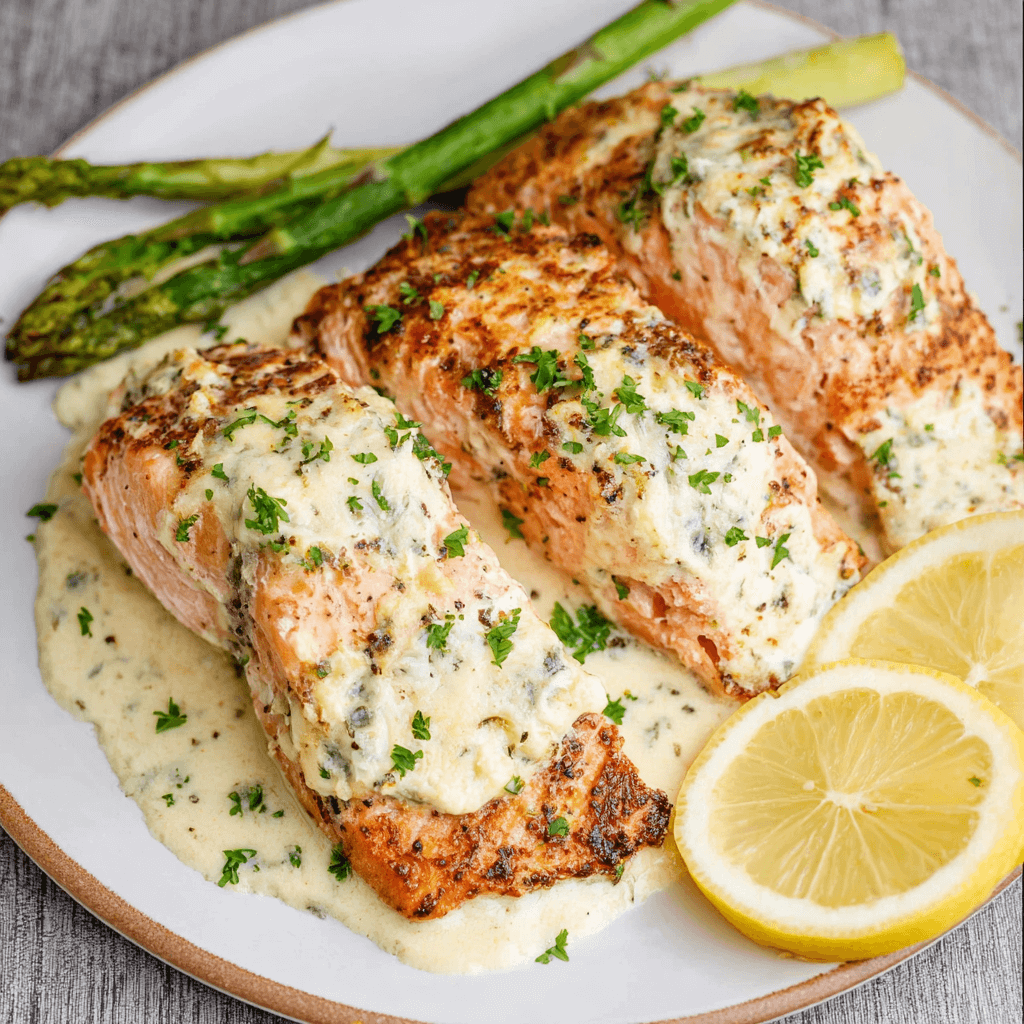
There is a specific kind of kitchen magic that happens when you find a recipe that looks elegant enough for a dinner party but takes less than five minutes of actual preparation. Baked Boursin salmon is exactly that. It relies on a single, high-quality shortcut—Boursin cheese—to create a built-in sauce that seasons the fish as it bakes.1
If you aren’t familiar with Boursin, it is a Gournay cheese known for its creamy, crumbly texture and punchy infusion of garlic and fine herbs.2 When placed atop a salmon fillet and subjected to the heat of the oven, the cheese softens into a velvety glaze that keeps the fish incredibly moist.3 It’s a foolproof method for anyone who is intimidated by cooking seafood or simply wants a sophisticated meal without the stress of reducing sauces on the stovetop.+1
Ingredients
This recipe is designed to be a “sheet pan” meal, meaning your protein and your vegetable side cook at the same temperature and finish at the same time.
- Salmon Fillets: 2 large fillets (about 6 oz each). Look for center-cut pieces of similar thickness so they cook evenly.
- Boursin Cheese: ½ wheel (approx. 2.5 oz) of Garlic & Fine Herbs flavor.
- Asparagus: 1 bunch, woody ends trimmed.
- Lemon: 1 half for slicing into rounds, the other half for juicing.
- Olive Oil: 1 tablespoon.4
- Panko Breadcrumbs: 2 tablespoons. These add a necessary crunch to contrast the creamy cheese.
- Salt and Black Pepper: To taste.
Instructions
The beauty of this dish is that the oven does all the heavy lifting. By the time the cheese is golden and bubbly, the salmon is perfectly flakey.
Prep the oven and pan
Preheat your oven to 400°F (200°C). Line a large rimmed baking sheet with parchment paper or a silicone mat. This prevents the cheese from sticking to the pan and makes cleanup nearly instantaneous.
Season the vegetables
Place the trimmed asparagus on one side of the baking sheet. Drizzle with olive oil and a pinch of salt and pepper. Toss them directly on the pan to coat, then spread them out in a single layer. This ensures they roast rather than steam.
Prepare the salmon
Place the salmon fillets on the other side of the tray. Pat the skin and the flesh dry with a paper towel. Season the tops lightly with salt and pepper. Take your Boursin cheese and gently press a thick layer (about 2 tablespoons) onto the top of each fillet, spreading it to the edges.
Add the crunch
Sprinkle the panko breadcrumbs over the top of the cheese, pressing down slightly so they adhere. If you like, place a thin lemon slice on top of the breadcrumbs or tucked alongside the fish for extra aromatics.
Bake to perfection
Slide the tray into the oven. Bake for 12 to 15 minutes, depending on the thickness of your salmon. You are looking for the breadcrumbs to be toasted and the salmon to reach an internal temperature of 145°F (63°C), or until it flakes easily with a fork.
Finish with brightness
Remove the tray from the oven and immediately squeeze the remaining lemon half over the asparagus and the fish. The hit of fresh acid cuts through the richness of the cheese perfectly.
Flavor and Texture Notes
The primary appeal of this dish is the interplay between the rich, fatty salmon and the herb-heavy creaminess of the cheese. As the Boursin melts, the garlic and chive flavors penetrate the top layer of the fish. The panko provides a “shatter” of texture that mimics a crust, while the asparagus stays tender-crisp with a slight char from the high heat.
The overall profile is savory, buttery, and bright. It feels substantial and “fancy” despite the minimal ingredient list.
Tips and Variations
- The Spinach Bed: If you prefer greens over asparagus, you can bake the salmon on a bed of fresh baby spinach. The juices from the fish and the melting cheese will wilt the spinach into a built-in side dish.
- Nutty Crust: For a grain-free or keto-friendly version, swap the panko breadcrumbs for crushed walnuts or pecans.
- Adjust the Heat: If you like a bit of spice, stir a pinch of crushed red pepper flakes into the Boursin before spreading it on the fish.
- Skin-On vs. Skinless: I prefer skin-on salmon for baking as it provides a buffer between the heat of the pan and the delicate flesh, but skinless fillets work just as well here since the cook time is relatively short.
Storage and Make-Ahead
- Meal Prep: You can “crust” the salmon with the cheese and breadcrumbs up to 4 hours in advance and keep them covered in the fridge. When you’re ready for dinner, just toss the asparagus on the tray and bake.
- Leftovers: Baked salmon is best enjoyed fresh, but leftovers can be stored in an airtight container for up to 2 days.
- Creative Reheating: Instead of microwaving (which can make the fish rubbery), flake the cold salmon into a salad or stir it into a warm pasta the next day. The leftover Boursin acts as a great base for a quick pasta sauce.
Serving Suggestions
This is a complete meal on its own, but if you want to round it out further, consider these pairings:
- Orzo or Quinoa: A side of buttery orzo or fluffy quinoa helps soak up any cheese that melts off the salmon onto the pan.
- Crispy Smashed Potatoes: If you have more time, serving this alongside salty, crispy potatoes creates a high-end bistro feel.
- Wine Pairing: A crisp, cold Sauvignon Blanc or a lightly oaked Chardonnay complements the garlic and cream elements beautifully.
FAQ
Can I use frozen salmon?
Yes, but ensure it is completely thawed and patted dry before you start. If there is excess moisture in the fish, the Boursin will slide off during the baking process rather than forming a crust.
Is Boursin the same as cream cheese?
Not exactly. While both are fresh cheeses, Boursin is much more crumbly and carries a distinct herb and garlic profile.5 If you can’t find Boursin, you could use a garlic-herb cream cheese, but the texture will be slightly more “gooey” and less “crust-like.”
What if my asparagus is very thin?
If you have “pencil” asparagus, wait to add it to the baking sheet until the salmon has already been in the oven for 5 minutes. This prevents the thin stalks from overcooking and becoming mushy.
How do I know when the salmon is done without a thermometer?
Use a fork to gently press down on the thickest part of the fillet. If the layers of the fish separate easily (flake) and the color has changed from translucent pink to an opaque coral, it’s ready.
Conclusion
The Baked Boursin Salmon is a reminder that good cooking doesn’t have to be complicated. By letting a well-crafted ingredient like Boursin do the heavy lifting, you’re free to enjoy your evening rather than standing over a stove. It’s a reliable, delicious, and visually beautiful meal that never fails to impress.