Follow Me On Social Media!
Chocolate Babka: A Rich and Twirled Classic.

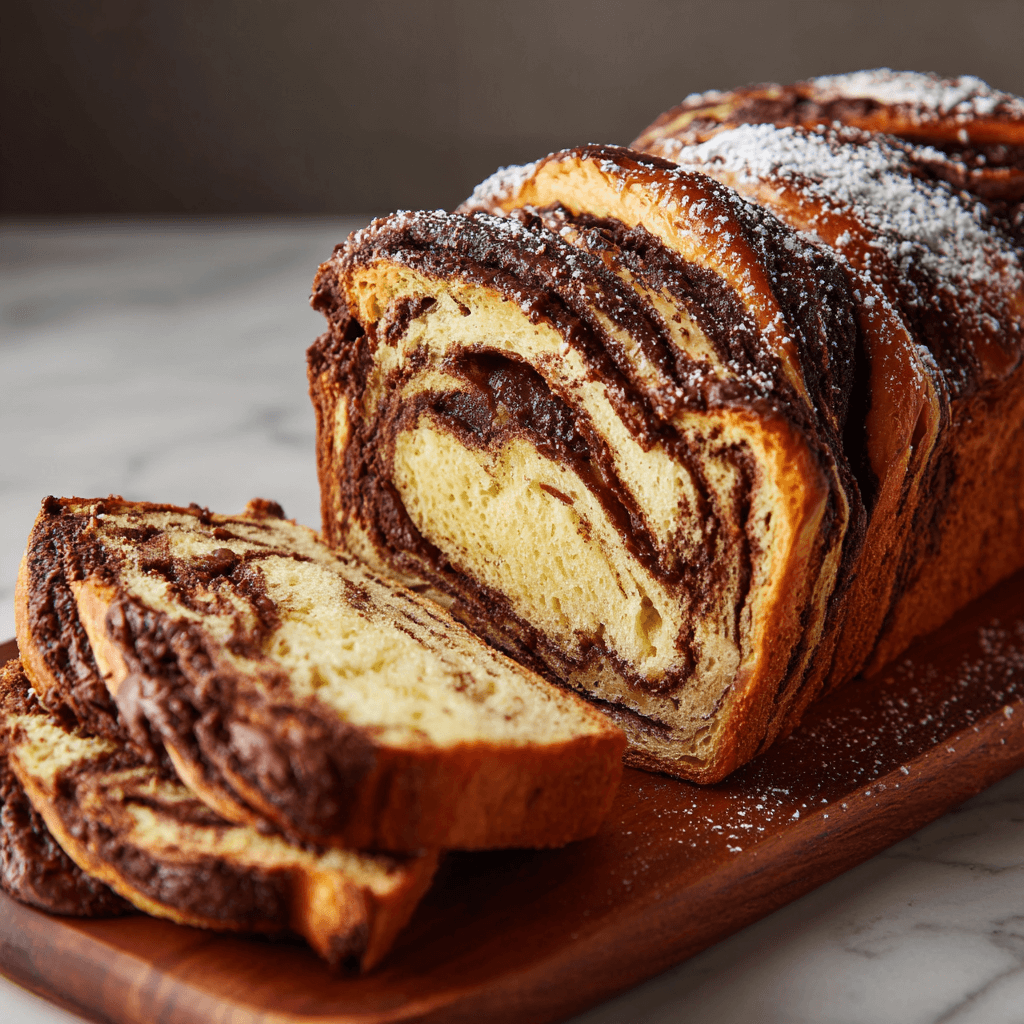
The Chocolate Babka is more than just a loaf of bread; it is a masterpiece of Jewish baking that sits perfectly at the intersection of a brioche and a confection. It is defined by its dramatic architecture: layers of enriched, buttery dough twisted together with a dark, fudgy chocolate filling.1 When sliced, it reveals a mesmerizing marble pattern that promises a perfect ratio of soft bread to intense cocoa in every single bite.
The beauty of this recipe lies in the “overnight” process. By letting the dough proof slowly in the refrigerator, the butter solidifies and the flavors develop, making the dough incredibly easy to roll into thin, delicate layers. It is a labor of love that turns humble ingredients—flour, yeast, and chocolate—into a sophisticated, towering treat that is as beautiful to look at as it is to eat.
Ingredients
To achieve the signature “melt-in-your-mouth” texture, use high-quality butter and dark chocolate.2 The dough is a brioche style, meaning it is high in fat, which results in a tender, pillow-soft crumb.
For the Brioche Dough
- All-Purpose Flour: 4 cups (plus extra for dusting).3
- Granulated Sugar: ½ cup.
- Instant Yeast: 2 ¼ teaspoons (1 packet).
- Large Eggs: 2, room temperature.
- Whole Milk: ¾ cup, lukewarm.
- Unsalted Butter: ½ cup (1 stick), softened and cubed.
- Fine Sea Salt: ¾ teaspoon.
For the Chocolate Filling
- Dark Chocolate (60% cocoa): 6 oz, finely chopped.
- Unsalted Butter: ½ cup.
- Powdered Sugar: ½ cup.
- Cocoa Powder: 1/3 cup.
For the Simple Syrup (The Secret to Shine)
- Granulated Sugar: 1/3 cup.
- Water: 1/3 cup.
Instructions
1. Knead the Dough
In the bowl of a stand mixer fitted with the dough hook, combine the flour, sugar, and yeast. Add the milk and eggs, mixing on low speed until a shaggy dough forms. Gradually add the cubed butter, one piece at a time, followed by the salt. Increase the speed to medium and knead for 8–10 minutes until the dough is smooth, elastic, and pulls away from the sides of the bowl.
2. The Cold Proof
Place the dough in a lightly greased bowl, cover with plastic wrap, and refrigerate for at least 6 hours (or overnight). Cold dough is essential for rolling out those thin, professional layers without the butter melting.
3. Prepare the Filling
Melt the butter and chopped chocolate together in a double boiler or microwave. Once smooth, stir in the powdered sugar and cocoa powder until you have a spreadable paste. Let it cool slightly so it isn’t runny.
4. Roll, Spread, and Twist
On a floured surface, roll the cold dough into a large rectangle (roughly 12×18 inches). Spread the chocolate filling evenly to the edges. Starting from the long side, roll the dough into a tight log. Use a sharp knife to split the log in half lengthwise, exposing the chocolate layers. Twist the two strands over each other like a rope, then tuck the ends under and place into a greased loaf pan.
5. Bake and Glaze
Let the babka rise at room temperature for 1–2 hours until puffed. Bake at 375°F for 30–35 minutes. While it bakes, simmer the sugar and water for the syrup. As soon as the babka comes out of the oven, brush the hot syrup over the top. This seals in moisture and gives it a professional bakery shine.
Flavor and Texture Notes
The first sensation is the buttery, yeasty aroma of the bread, which has a soft, brioche-like pull. As you bite through, you encounter the ribbons of dark chocolate—a texture that is dense, fudgy, and intensely rich.
The simple syrup creates a slightly tacky, sweet crust on the outside that protects the interior, keeping it moist for days. It is a balanced experience where the bitterness of the dark cocoa perfectly offsets the sweetness of the enriched dough, making it as suitable for a morning coffee as it is for a late-night dessert.
Tips for Success
- Don’t Rush the Rise: Because the dough is heavy with butter and sugar, it rises more slowly than standard bread. Give it the time it needs to become airy.
- The Clean Cut: Use a very sharp serrated knife or even unflavored dental floss to split the log; this ensures the layers stay distinct rather than smushing together.
- Don’t Skip the Syrup: It might seem like a lot of sugar, but the syrup is what gives babka its characteristic “moist” texture and prevents it from drying out.
Storage and Make-Ahead
- Room Temperature: Babka stays fresh in an airtight container for up to 4 days.
- Freezing: Babka freezes exceptionally well. Wrap the cooled loaf tightly in plastic wrap and foil; it will stay delicious for up to 2 months.
- The Leftover Trick: If the babka gets a little dry after a few days, it makes the absolute best French Toast or bread pudding you will ever taste.
FAQ
Can I use a different filling?
Yes! Cinnamon-sugar with walnuts is a classic alternative. You can also use Nutella for a quick shortcut, though it will be slightly sweeter and softer than the homemade filling.
My dough is very sticky, should I add more flour?
Resist the urge! A brioche dough is supposed to be tacky. If you add too much flour, the bread will be tough and dry rather than light and fluffy.
Why did my filling leak out?
This usually happens if the dough wasn’t rolled tightly enough or if the filling was too warm when spread. Make sure both your dough and filling are at the right consistency before rolling.
Conclusion
Chocolate Babka is a reminder that the most satisfying bakes often come from the simplest ingredients treated with patience and care. It is a “pantry-staple” miracle—transforming flour, butter, and chocolate into a sophisticated, twisted masterpiece. Whether you’re looking for a stunning centerpiece for a holiday brunch or a reliable classic to master your yeast-baking skills, this babka is a reliable, delicious classic.