Follow Me On Social Media!
Classic Cream of Potato Soup: A Silky Comfort Favorite.

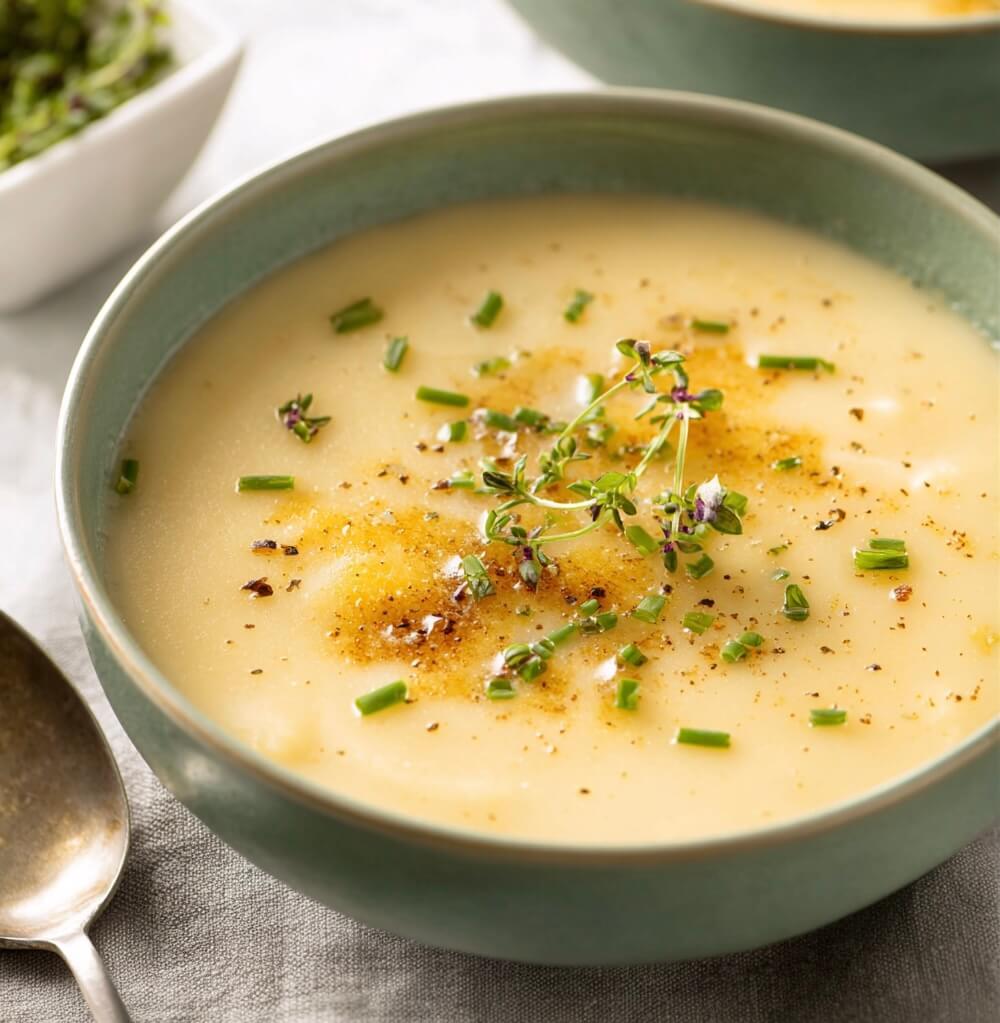
Cream of potato soup is a cornerstone of cold-weather cooking.1 It relies on the humble potato’s natural starches to create a thick, satisfying base that feels luxurious without being overly complicated.2 Unlike a chunky potato leek soup or a loaded baked potato soup, a true “cream of” version is blended until smooth, resulting in a consistent, velvet-like texture that highlights the buttery flavor of the tubers.3+2
The secret to a reliable potato soup lies in the choice of potato and the method of simmering. Using a starchy variety like a Russet or Maris Piper ensures the soup thickens naturally when blended. By sautéing aromatics in butter before adding the liquid, you build a foundation of flavor that makes the finished dish taste professional. It is an honest, soul-warming recipe that serves as the perfect canvas for your favorite garnishes.
Ingredients
The Soup Base
- 1kg Potatoes: (Russet or Yukon Gold), peeled and cubed into small pieces.
- 50g Unsalted Butter.
- 1 Large Yellow Onion: Finely diced.
- 2 Stalks Celery: Finely diced.
- 2 Cloves Garlic: Minced.
- 1 Litre Chicken or Vegetable Stock.
- 1/2 Teaspoon Dried Thyme.
- Salt and White Pepper to taste: (White pepper keeps the soup looking pristine).
The Cream Finish
- 250ml Heavy Cream or Whole Milk.
- 1/4 Teaspoon Ground Nutmeg: (Optional, for a classic French undertone).
Instructions
1. Sauté the Aromatics
In a large, heavy-bottomed pot, melt the butter over medium heat. Add the diced onion and celery. Sauté for 6 to 8 minutes until the vegetables are soft and translucent. Do not let them brown; you want to maintain a light color for the final soup. Stir in the garlic and cook for another 60 seconds until fragrant.
2. Simmer the Potatoes
Add the cubed potatoes, stock, and dried thyme to the pot. Bring the mixture to a boil, then reduce the heat to low. Cover the pot and simmer for 15 to 20 minutes, or until the potatoes are very tender and fall apart easily when pierced with a fork.
3. The Blend
Remove the pot from the heat. Use an immersion blender directly in the pot to process the soup until it is completely smooth and creamy. If you do not have an immersion blender, transfer the soup in batches to a standard blender, being careful to allow steam to escape so the lid doesn’t pop off.4
4. Temper and Cream
Return the pot to low heat. Stir in the heavy cream and ground nutmeg. Heat the soup gently for another 2 to 3 minutes—do not let it reach a rolling boil once the cream is added, as this can cause the texture to change.
5. Season
Taste the soup and add salt and white pepper as needed. Potato soup requires a fair amount of salt to truly sing, so adjust incrementally until the flavors are bright.
Flavor & Texture Notes
The primary sensation of this soup is buttery smoothness. The texture is dense and rich, coating the palate with a comforting weight.
Flavor-wise, it is mild and earthy, with the sweetness of the sautéed onions and the herbal note of thyme providing a gentle complexity. The nutmeg adds a faint, spicy warmth that makes the creaminess feel even more indulgent.
Tips & Variations
- The Loaded Version: While the soup itself is smooth, you can top it with crispy bacon bits, shredded cheddar cheese, and chopped chives for a more traditional American style.
- Leek Substitution: Replace the yellow onion with two large cleaned and sliced leeks for a more delicate, “Vichyssoise” style flavor.
- The Chunky Hybrid: If you prefer some texture, remove two cups of the cooked potato cubes before blending, then stir them back in at the end.
Storage & Reheating
- Refrigeration: This soup stores exceptionally well in an airtight container for up to 4 days.
- Reheating: Reheat slowly on the stovetop over low heat. If the soup has thickened too much in the fridge (potatoes continue to absorb liquid), simply whisk in a splash of milk or stock to restore the creamy consistency.
- Freezing: I do not recommend freezing cream-based potato soups, as the potatoes can become grainy and the dairy may separate upon thawing.
FAQ
Why is my soup gluey?
This usually happens if the potatoes are over-processed. If using a high-speed blender, use the lowest setting and stop as soon as it is smooth. Over-working the starch in potatoes can lead to a sticky, “gluey” texture.5
Can I leave the skins on?
For a “Cream of” soup, peeling is essential to achieve that signature silky-white appearance and smooth mouthfeel. Skins will introduce dark flecks and a rustic texture.
What if I don’t have heavy cream?
Full-fat milk or half-and-half works well. For a dairy-free version, coconut milk or a splash of cashew cream provides a similar richness.
Conclusion
Cream of Potato Soup is a masterclass in the transformative power of simmering and blending. By focusing on the quality of the aromatics and the thorough cooking of the potatoes, you create a dish that is far more than the sum of its humble parts. It is a foolproof recipe that consistently provides a warm, elegant, and deeply satisfying result.