Follow Me On Social Media!
Lemon Butter Salmon


Lemon Butter Salmon is an elegant yet approachable dish that combines tender, oven-baked salmon with a silky lemon butter cream sauce. Using classic French-inspired techniques, the salmon is gently baked while a rich, citrus-forward sauce is prepared on the stovetop. The result is a restaurant-quality dinner with bright acidity, luxurious texture, and perfectly cooked fish.
Why You’ll Love This Recipe
- Restaurant-Quality Results – A velvety cream sauce and perfectly baked salmon deliver refined flavor with minimal effort.
- Quick & Efficient Cooking – Ready in just 35 minutes, making it ideal for weeknight dinners or last-minute entertaining.
- Naturally Low-Carb & Gluten-Free – Rich and satisfying without relying on starches or flour.
- Balanced Flavor Profile – Lemon acidity cuts through the butter and cream for a clean, not-heavy finish.
- Reliable Cooking Method – Oven baking ensures even cooking and moist salmon every time.
- Elegant Presentation – Lemon slices and fresh herbs create a visually polished final dish.
Ingredients You’ll Need
For the Salmon
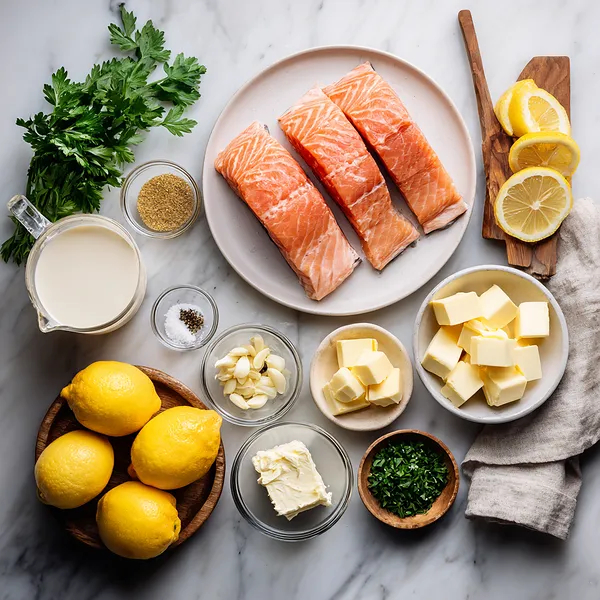
- 4 salmon fillets (6 oz each) – Provides a rich, flaky protein with healthy omega-3 fats.
- Salt and black pepper, to taste – Enhances the natural flavor of the salmon and seasons evenly.
For the Lemon Butter Cream Sauce
- 4 tablespoons unsalted butter – Forms the flavorful base of the sauce while allowing salt control.
- 3 cloves garlic, minced – Adds aromatic depth without overpowering the sauce.
- 1 cup heavy cream – Creates a rich, smooth texture that coats the salmon beautifully.
- Juice of 2 fresh lemons – Brightens the sauce and balances the richness.
- 1 teaspoon Dijon mustard – Adds subtle sharpness and helps emulsify the sauce.
- 1/4 cup fresh parsley, chopped – Brings freshness, color, and herbaceous balance.
- Fresh lemon slices (for garnish) – Enhances presentation and reinforces citrus aroma.
Step-by-Step Instructions
- Prepare the Salmon – Preheat the oven to 400°F (200°C), pat the salmon dry, and season generously with salt and black pepper on both sides.
- Bake Until Tender – Arrange fillets on a parchment-lined baking sheet and bake for 12–15 minutes, until the salmon flakes easily and reaches an internal temperature of 145°F.
- Rest the Salmon – Remove from the oven and tent loosely with foil to retain moisture while finishing the sauce.
- Sauté the Aromatics – Melt butter in a skillet over medium heat, then sauté garlic for 1–2 minutes until fragrant but not browned.
- Build the Sauce – Add heavy cream, bring to a gentle simmer, then whisk in Dijon mustard and lemon juice, cooking 3–4 minutes until slightly thickened.
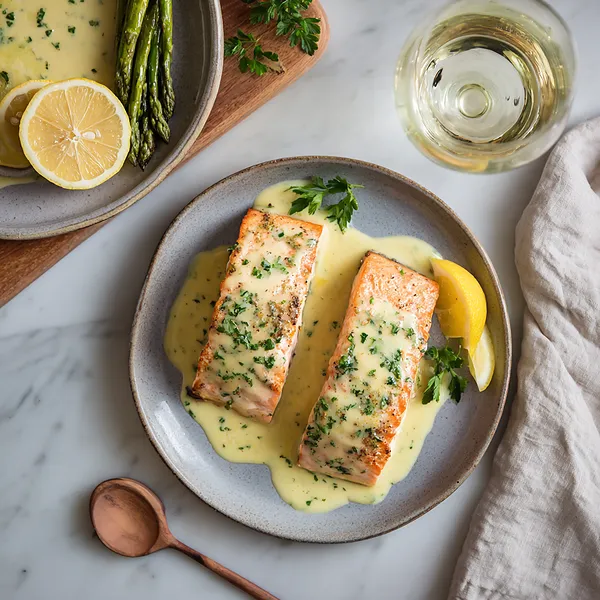
- Finish & Serve – Stir in half the parsley, season to taste, spoon sauce over salmon, and garnish with remaining parsley and lemon slices.
Recipe Notes & Tips
- Dry the Salmon Thoroughly – Removing surface moisture improves color and prevents steaming.
- Gentle Simmer Only – Avoid boiling the cream to prevent separation.
- Sauce Consistency Control – Simmer longer for thicker sauce or loosen with cream or broth.
- Wild-Caught Preference – Wild salmon offers firmer texture and deeper flavor.
- Reheat Carefully – Low oven temperatures preserve moisture and prevent curdling the sauce.
Nutritional Information
- Prep Time: 15 minutes
- Cooking Time: 20 minutes
- Total Time: 35 minutes
- Servings: 4 servings (one salmon fillet per serving)
- Calories: ~520 calories per serving (estimate; varies by cream and portion size)
Perfect Pairings
- Steamed Asparagus – Clean, grassy flavors complement the richness of the sauce.
- Cauliflower Purée – Maintains a low-carb profile while adding creamy texture.
- Herbed Green Beans – Adds freshness and crunch.
- Dry White Wine – Sauvignon Blanc or Chablis pairs well with lemon and butter.
Ideal Occasions
- Weeknight Dinners – Simple enough for everyday cooking with elevated results.
- Date Nights at Home – Elegant presentation without complicated steps.
- Dinner Parties – Scales easily and plates beautifully.
- Low-Carb Entertaining – Satisfying without feeling heavy.
Storage & Serving Tips
- Short-Term Storage – Refrigerate leftovers in an airtight container for up to 2 days.
- Separate Sauce if Possible – Prevents the salmon from becoming overly soft.
- Gentle Reheating – Warm in a 275°F (135°C) oven to avoid drying out.
- Serve Immediately – Best texture and flavor when fresh.
Creative Variations to Try
- White Wine Lemon Sauce – Add a splash of dry white wine for added acidity and depth.
- Herb Swap – Use tarragon or chives instead of parsley for a French twist.
- Dairy-Light Version – Replace half the cream with chicken broth for a lighter sauce.
- Pan-Seared Finish – Sear salmon briefly before baking for added caramelization.
Troubleshooting Common Issues
- Dry Salmon – Reduce bake time or check thickness before cooking.
- Sauce Too Thin – Simmer a few minutes longer while stirring gently.
- Sauce Too Thick – Whisk in warm cream or broth a tablespoon at a time.
- Garlic Browning – Lower heat and add cream immediately if garlic darkens.
Why This Recipe Works
This recipe balances precise heat control with classic emulsification techniques. Baking the salmon gently ensures even doneness and moisture retention, while resting prevents protein tightening. The lemon butter cream sauce succeeds because fat, acid, and gentle heat are carefully managed—Dijon stabilizes the emulsion, lemon brightens richness, and cream provides structure. At approximately 520 calories per serving, the dish remains indulgent yet aligned with low-carb, nutrient-dense eating.
Final Thoughts
Lemon Butter Salmon is proof that refined, flavorful cooking doesn’t require complexity. With high-quality ingredients and thoughtful technique, this dish delivers rich taste, elegant presentation, and nutritional balance. For a lighter alternative, reduce the cream slightly or pair with steamed vegetables—without sacrificing the luxurious experience that makes this recipe a standout.