Follow Me On Social Media!
Oven-Baked Lemon Garlic Salmon: A Simple, Bright, and Healthy Classic.

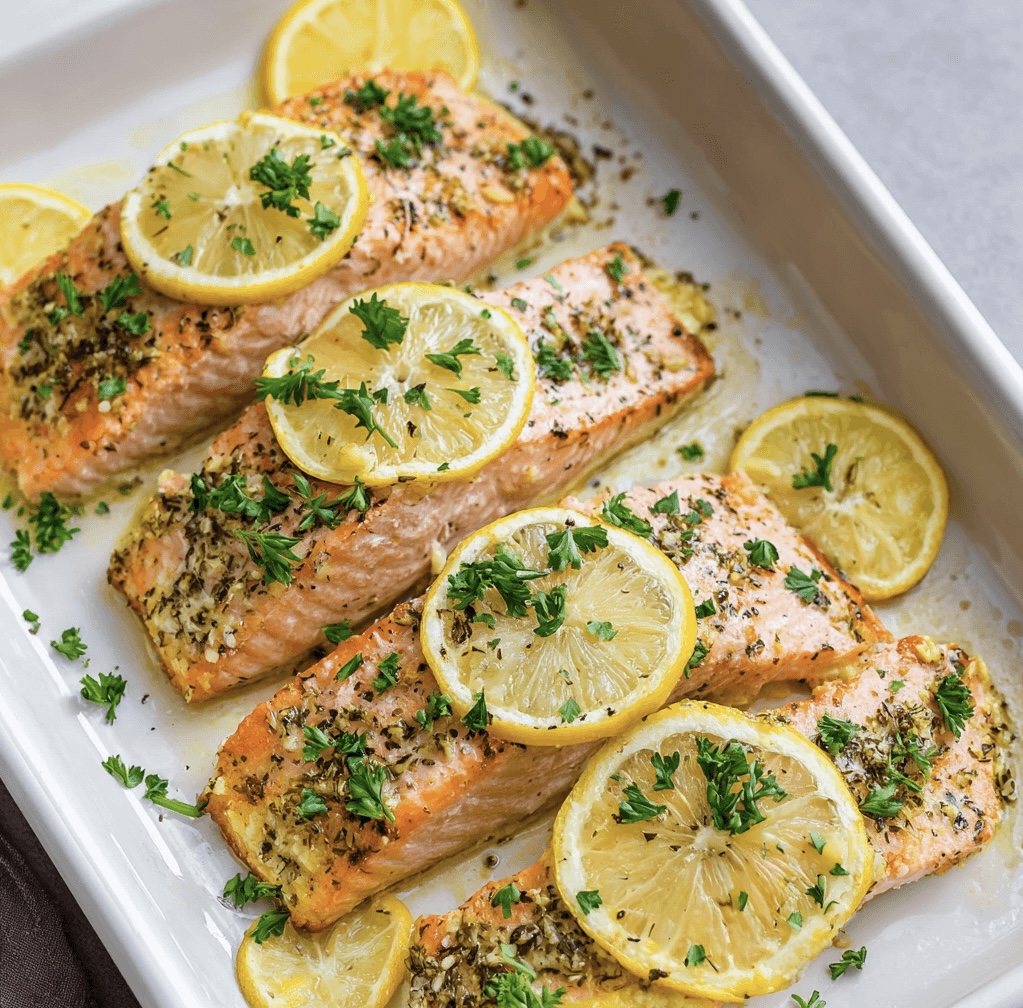
There is a distinct elegance in simplicity, especially when it comes to cooking seafood. Salmon is a naturally rich, flavorful fish that doesn’t require a complicated list of ingredients to shine.1 In fact, some of the most memorable meals are those that let the quality of the protein take center stage. This Baked Lemon Garlic Salmon is my go-to recipe for exactly those moments—when you want a dinner that feels light and refined but requires less than ten minutes of active preparation.
The combination of bright citrus, pungent garlic, and melted butter creates a classic “scampi-style” sauce that seeps into the flakes of the fish as it bakes. I started making this version on busy weeknights because it eliminates the mess of pan-searing. There’s no oil splattering on the stovetop and no frantic flipping of delicate fillets. Instead, the oven does all the work, gently roasting the salmon until it reaches that perfect, translucent-pink center. It is a foolproof method that ensures a succulent result every single time.
Ingredients
The Fish
- 4 Center-Cut Salmon Fillets: Approximately 6 oz each.2 Center-cuts are usually thicker and more uniform, which prevents the edges from drying out before the middle is cooked.3+1
- 1 Tablespoon Extra Virgin Olive Oil: To prevent sticking and help the seasoning adhere.4
The Lemon Garlic Glaze
- 3 Tablespoons Unsalted Butter: Melted. This provides the silky mouthfeel that balances the lemon’s acidity.
- 4 Cloves Garlic: Minced or pressed. Fresh garlic is essential here; the pre-minced jarred variety lacks the necessary “bite.”
- 1 Large Lemon: You will need both the zest and about 2 tablespoons of the juice.
- 1/2 Teaspoon Dried Oregano or Thyme: To add a subtle herbal undertone.
- 1/2 Teaspoon Fine Sea Salt: To taste.
- 1/4 Teaspoon Cracked Black Pepper: To taste.
The Garnish
- Fresh Parsley: Finely chopped, for a burst of color and freshness.
- Thin Lemon Slices: To place on top of the fillets while they bake.5
Instructions
1. Prepare for Baking
Preheat your oven to 400°F (200°C). Line a rimmed baking sheet with aluminum foil or parchment paper. This is a “one-pan” meal, and the lining ensures that cleanup takes about thirty seconds. Lightly grease the liner with a small amount of olive oil.
2. Season the Salmon
Pat the salmon fillets dry with a paper towel. This is a crucial step; any excess moisture on the surface of the fish will cause it to steam rather than roast, which can lead to a mushy texture. Place the fillets on the prepared baking sheet, skin-side down.
3. Whisk the Glaze
In a small bowl, combine the melted butter, minced garlic, lemon juice, lemon zest, salt, pepper, and dried herbs. Whisk vigorously until the mixture is well combined. The zest is where the essential oils live, so don’t skip it—it provides that “restaurant-quality” citrus punch.6
4. Apply and Top
Spoon the lemon garlic mixture evenly over the four fillets. Use the back of the spoon to spread it so the entire top surface is coated. Place a thin slice of lemon on top of each fillet; as it bakes, the lemon slice will soften and release its juices directly into the fish.
5. Roast to Perfection
Slide the baking sheet into the oven. Bake for 12 to 15 minutes. The exact time will depend on the thickness of your fillets. You are looking for the salmon to be opaque and for it to flake easily when you gently press a fork into the thickest part. If you prefer a slightly charred top, you can turn on the broiler for the final 60 seconds of cooking.
Flavor and Texture Notes
This dish is a study in balance. The salmon itself is buttery and tender, with a rich flavor that is perfectly countered by the sharp, clean acidity of the lemon. The garlic, having mellowed in the oven, provides a savory depth that lingers without being overpowering.
Texture-wise, the salmon should be moist and “silky.” Because we bake it at a relatively high temperature for a short time, the exterior gets a light sear while the interior stays succulent. The fresh parsley added at the end provides a crisp, grassy finish that wakes up all the warm, savory notes of the garlic butter.
Tips and Variations
The beauty of this recipe is its versatility. Once you master the basic technique, you can easily tweak the flavors:
- Add a Kick: If you enjoy a bit of heat, add a half-teaspoon of red pepper flakes to the butter mixture.
- Make it Honey-Lemon: Stir one teaspoon of honey into the glaze before baking for a sweet-and-savory twist that caramelizes beautifully.
- Sheet Pan Meal: Add a bunch of thin asparagus or halved cherry tomatoes to the baking sheet around the salmon. They will cook in the same 12-15 minute window, giving you a full meal with zero extra effort.
- Dairy-Free: Substitute the butter with extra virgin olive oil or a high-quality vegan butter alternative. The lemon and garlic are flavorful enough that you won’t miss the dairy.
Storage and Make-Ahead
Salmon is at its absolute peak the moment it leaves the oven, but it can be stored for lunch the following day.
- Refrigeration: Store any leftover fillets in an airtight container for up to 2 days.
- The “Cold” Option: Leftover lemon garlic salmon is actually delicious served cold over a Greek salad or tucked into a wrap with some leafy greens.
- Reheating: If you prefer it warm, reheat it very gently in a 300°F oven for about 8-10 minutes. Avoid the microwave if possible, as it tends to overcook the delicate proteins in the fish, making it rubbery.
Serving Suggestions
To keep the meal light and vibrant, serve the salmon alongside a heap of garlic-sauteed spinach or a simple quinoa pilaf. The lemon garlic sauce from the pan is liquid gold—make sure to drizzle any extra over your side dishes!
For a more traditional pairing, roasted baby potatoes or a side of wild rice provides a nice earthy base for the citrusy fish. A chilled glass of Pinot Grigio or a light, crisp Sauvignon Blanc complements the acidity of the lemon perfectly and makes the whole meal feel like a special occasion.
FAQ
How do I know if the salmon is overcooked?
If you see a lot of white “goop” (which is actually a protein called albumin) pushing out of the sides of the fish, it’s a sign that the salmon is starting to overcook. It’s perfectly safe to eat, but it means the fish might be a bit drier than intended. Aim to pull it out just as it starts to flake.
Should I leave the skin on?
Yes. Even if you don’t plan on eating the skin, leaving it on during the baking process provides a protective layer that keeps the juices inside the fish. The skin will easily slide off once the salmon is cooked.
Can I use frozen salmon fillets?
Absolutely. Just make sure they are completely thawed in the refrigerator before you start. Pat them extremely dry to ensure the garlic butter sticks to the surface.
Can I make this with a whole side of salmon instead of individual fillets?
Yes! A whole side of salmon makes a stunning centerpiece for a dinner party. You will likely need to increase the baking time to 15–20 minutes, depending on the weight and thickness.
Conclusion
Baked Lemon Garlic Salmon is a testament to the fact that healthy eating can—and should—be delicious. It’s a recipe that respects your time while delivering a meal that feels genuinely special. By focusing on fresh aromatics and a gentle cooking method, you turn a simple piece of fish into a vibrant, nourishing dinner that satisfies the soul as much as the palate.