Follow Me On Social Media!
Salmon Piccata: A Zesty Mediterranean Classic.

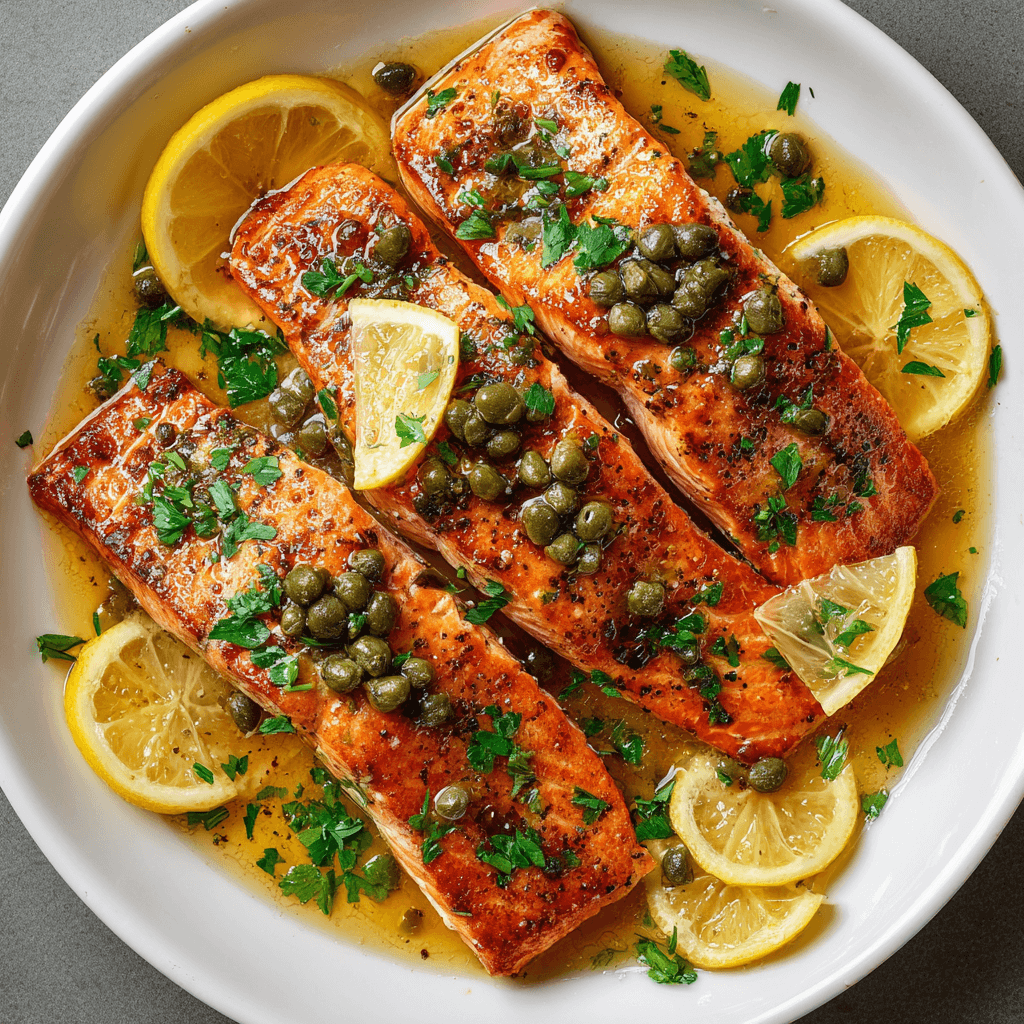
Salmon Piccata is a sophisticated twist on the traditional Italian veal or chicken preparation.1 This dish features pan-seared salmon fillets bathed in a vibrant sauce of lemon, butter, white wine, and briny capers.2 The acidity of the lemon and the saltiness of the capers provide a sharp contrast to the rich, buttery fats of the salmon.3+2
The success of this recipe lies in achieving a crisp, golden exterior on the fish while maintaining a medium-rare center.4By lightly dredging the salmon in flour, you create a surface that not only browns beautifully but also helps thicken the sauce into a silky emulsion.5+1
Ingredients
The Salmon
- 4 Salmon Fillets: (Approx. 170g each), skin-on or skinless.
- 50g All-Purpose Flour: For dredging.
- 2 Tablespoons Olive Oil.6
- 1 Tablespoon Unsalted Butter.
- Salt and Black Pepper: To taste.
The Piccata Sauce
- 120ml Dry White Wine: (Pinot Grigio or Sauvignon Blanc).
- 2 Tablespoons Capers: Drained and rinsed.
- 3 Tablespoons Unsalted Butter: Cold and cubed.
- 1 Small Lemon: Juiced (approx. 2 tablespoons).
- 2 Cloves Garlic: Minced.
- Fresh Parsley: Chopped, for garnish.7
- Lemon Slices: For presentation.
Instructions
1. Prepare and Dredge
Pat the salmon fillets thoroughly dry with paper towels.8 Season both sides with salt and pepper. Place the flour on a shallow plate and lightly dredge the salmon, shaking off any excess.9 This thin coating is essential for a golden crust.+1
2. The Sear
Heat the olive oil and 1 tablespoon of butter in a large skillet over medium-high heat. Once the butter is foaming, add the salmon fillets (skin-side up first, if applicable). Sear for 3 to 4 minutes until a golden-brown crust forms. Flip carefully and cook for another 2 minutes. Remove the salmon from the pan and set it aside on a plate; it will finish cooking in the residual heat of the sauce.
3. Sauté Aromatics
Reduce the heat to medium. In the same skillet, add the minced garlic and cook for 1 minute until fragrant. Do not let the garlic brown, as it will turn bitter.
4. Deglaze and Simmer
Pour the white wine into the skillet, using a wooden spoon to scrape up the browned bits from the bottom of the pan.10Stir in the lemon juice and capers. Let the liquid simmer for 3 to 5 minutes until it has reduced by about half.
5. Emulsify the Sauce
Turn the heat to low. Whisk in the cold, cubed butter one piece at a time. This technique, known as monter au beurre, creates a glossy, thickened sauce that won’t separate. Stir in the fresh parsley.
6. Finish and Serve
Place the salmon fillets back into the skillet. Spoon the warm sauce over the fish and let it sit for 1 minute to warm through. Garnish with fresh lemon slices and serve immediately.
Flavor & Texture Notes
The primary sensation is citrus-bright umami. The lemon and white wine provide a sharp, acidic lift that cuts through the fatty richness of the salmon.11
The capers offer small bursts of brine and salt, while the flour-dredged exterior of the fish provides a delicate, savory crunch. The sauce should be velvety and light, never heavy or greasy.
Tips & Variations
- Non-Alcoholic Version: Replace the white wine with an equal amount of chicken or vegetable stock mixed with an extra teaspoon of lemon juice.
- Skin-On Salmon: If using skin-on fillets, sear the skin side first for 4–5 minutes to ensure it becomes perfectly crisp.
- The “Cold Butter” Rule: Always use cold butter when finishing the sauce. Warm butter will melt too quickly and oily up the sauce rather than thickening it.
Storage & Maintenance
- Refrigeration: Salmon is best enjoyed fresh. Leftovers can be stored in an airtight container for up to 2 days.
- Reheating: To avoid overcooking the salmon, reheat it gently in a skillet over low heat with a splash of water or stock to loosen the sauce.
- Freezing: I do not recommend freezing this dish; the emulsion of the sauce will break and the texture of the cooked salmon will become tough.
FAQ
Why did my sauce separate?
This usually happens if the heat is too high when adding the butter or if you add all the butter at once. Keep the heat low and whisk constantly.
What kind of wine is best?
Use a dry, crisp white wine. Avoid sweet wines like Riesling or Moscato, as they will clash with the savory capers and lemon.
Can I use frozen salmon?
Yes, but ensure it is completely thawed and patted extremely dry. Any excess moisture will prevent the flour from sticking and the fish from searing.
Conclusion
Salmon Piccata is a masterclass in the balance of acidity and fat. By utilizing the monter au beurre technique and a proper sear, you create a dish that is consistently elegant and restaurant-quality. It is a reliable recipe that provides a vibrant, healthy experience.