Follow Me On Social Media!
Salmon Rice Bowl: A Fresh and Balanced Classic.

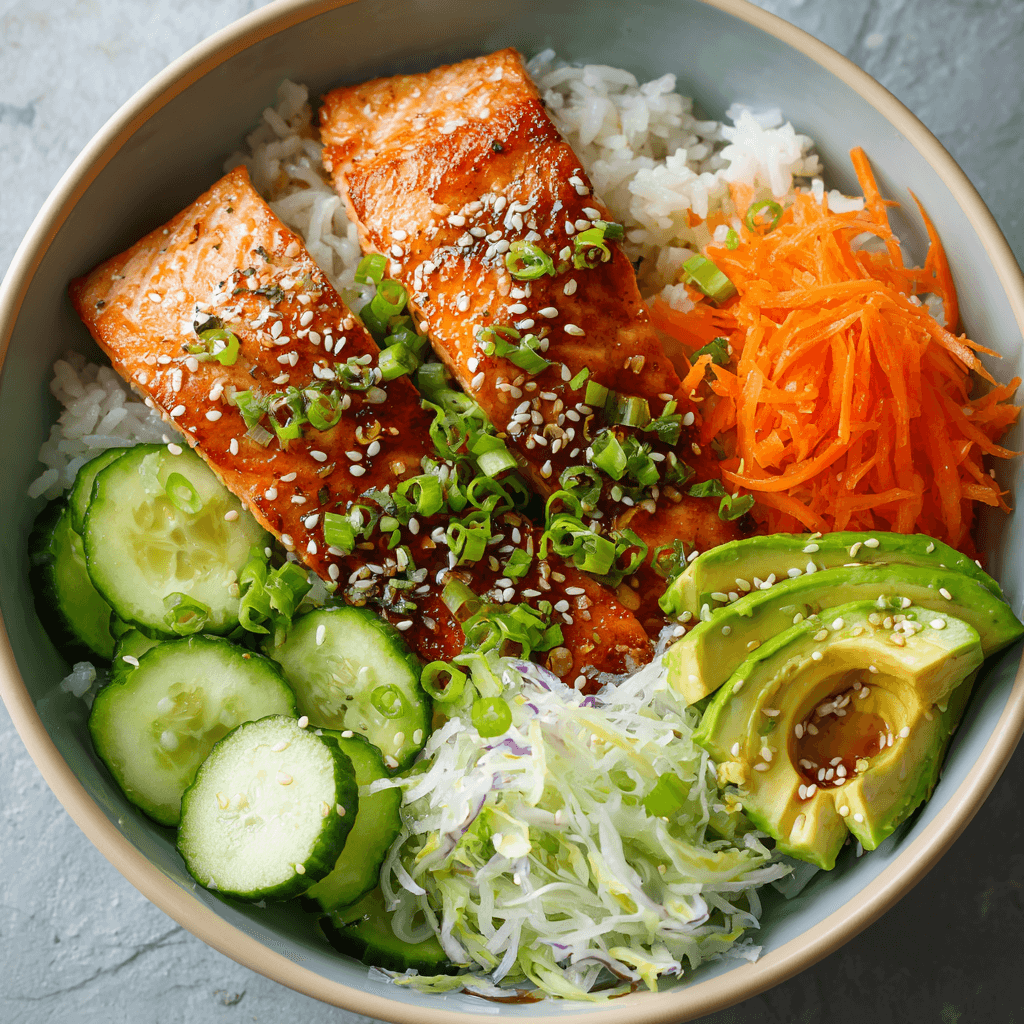
The Salmon Rice Bowl has surged in popularity as the ultimate modern “power meal.” It is a dish defined by its clean flavors and contrasting textures: the warmth of flaked, savory salmon, the soft chew of steamed rice, and the cool, crisp snap of fresh vegetables. While it gained viral fame as a clever way to use leftovers, the best version is built with intention—relying on a balance of healthy fats, complex carbohydrates, and a punchy, umami-rich dressing.
The beauty of this recipe lies in its versatility. It is a “build-your-own” masterpiece that can be adapted to whatever is in your crisper drawer. By focusing on a high-heat sear for the salmon and a vibrant ginger-soy glaze, you create a restaurant-quality meal that feels light yet deeply satisfying. It is the perfect solution for a 20-minute weeknight dinner that doesn’t sacrifice nutrition for speed.
Ingredients
To achieve a melt-in-the-mouth texture, use high-quality salmon fillets. While any rice works, short-grain sushi rice provides the best “clinging” texture for the toppings.1
- Salmon Fillets: 2 (roughly 6 oz each), skin-on or off.
- Cooked Rice: 2 cups (Sushi rice, Jasmine, or Brown rice).2
- Avocado: 1 ripe, sliced.3
- Cucumber: ½ cup, thinly sliced into rounds.
- Edamame: ½ cup, shelled and steamed.
- Nori (Seaweed):4 Shredded or small sheets for serving.
- Sesame Seeds & Green Onions: For garnish.5
The Signature Sauce
- Soy Sauce: 2 tablespoons (or Tamari for gluten-free).
- Rice Vinegar: 1 tablespoon.
- Sesame Oil: 1 teaspoon.
- Honey or Maple Syrup: 1 teaspoon.
- Grated Ginger: ½ teaspoon.
- Optional: Sriracha or Kewpie Mayo for a spicy kick.
Instructions
1. Sear the Salmon
Pat the salmon fillets completely dry with paper towels. Season with salt and pepper. Heat a tablespoon of oil in a non-stick skillet over medium-high heat. Place the salmon in the pan (skin-side down first if applicable). Sear for 4 to 5 minutes until the skin is crispy, then flip and cook for another 2–3 minutes until just opaque in the center.
2. Flake and Glaze
In a small bowl, whisk together the soy sauce, rice vinegar, sesame oil, honey, and ginger. Once the salmon is cooked, remove it from the pan and use a fork to flake it into bite-sized chunks. Toss the warm salmon gently with half of the prepared sauce.
3. Prepare the Base
Place the warm cooked rice into two deep bowls. If using leftover rice, a trick to revive it is to place a single ice cube in the center, cover the bowl with parchment paper, and microwave for 1 minute—the steam from the ice cube makes the rice perfectly fluffy again.6
4. Assemble the Bowl
Arrange the flaked salmon, avocado slices, cucumber, and edamame in sections over the rice. This “deconstructed” look makes the bowl visually stunning and allows you to enjoy each component’s unique texture.
5. Final Flourish
Drizzle the remaining sauce over the entire bowl. Top with shredded nori, a sprinkle of sesame seeds, and finely sliced green onions. For a creamy finish, add a zigzag of spicy mayo.
Flavor and Texture Notes
The first sensation is the savory-sweet glaze hitting the warm salmon, which has a buttery, rich mouthfeel. This is immediately balanced by the cool, refreshing crunch of the cucumber and the creamy, mild fat of the avocado.
The rice acts as a neutral canvas, soaking up the ginger-soy dressing and providing a comforting, starchy base. Because of the nori and sesame seeds, every bite carries a hint of “sea spray” and nuttiness, mimicking the complex flavors of a gourmet poke bowl or a deconstructed sushi roll.
Tips and Variations
- The Air Fryer Method: For an even faster version, air fry the salmon at 400°F for 8–10 minutes. It results in incredibly crispy edges with almost no cleanup.
- Pickled Component: Add some pickled ginger or quick-pickled red onions to provide a sharp acidity that cuts through the fatty salmon.
- Grain Swap: For an even higher fiber count, substitute the rice with quinoa or cauliflower rice.
- Kimchi Kick: Stir in a spoonful of kimchi for a fermented, spicy depth that pairs beautifully with the soy-ginger sauce.
Storage and Make-Ahead
- Meal Prep: This is an excellent dish for meal prepping.7 Store the cooked salmon and rice in one container and the fresh vegetables in another.
- Reheating: If reheating the salmon and rice, do so gently. The vegetables and avocado should always be added fresh just before eating.
- Shelf Life: Cooked salmon is best enjoyed within 2 to 3 days when stored in an airtight container in the refrigerator.8
FAQ
Can I use canned salmon?
Yes! While fresh seared salmon is more decadent, high-quality canned salmon is a fantastic, budget-friendly shortcut. Simply flake it and toss it with the sauce.
Is this recipe gluten-free?
It can be! Just ensure you use Tamari or liquid aminos instead of traditional soy sauce, which usually contains wheat.
Why is my salmon dry?
Salmon cooks very quickly. It continues to cook for a minute even after being removed from the heat, so it is best to take it off the stove when the center is still slightly translucent.
Conclusion
The Salmon Rice Bowl is a reminder that the most satisfying meals often come from the simplest ingredients assembled with balance in mind. It is a “pantry-staple” miracle—transforming a piece of fish, a scoop of rice, and a few fresh garnishes into a sophisticated, nutrient-dense feast. Whether you’re looking for a quick post-workout lunch or a reliable dinner that stays fresh for meal prep, this rice bowl is a reliable, delicious classic.