Follow Me On Social Media!
Steak Fajita Power Bowls: A Vibrant, High-Protein Masterclass.

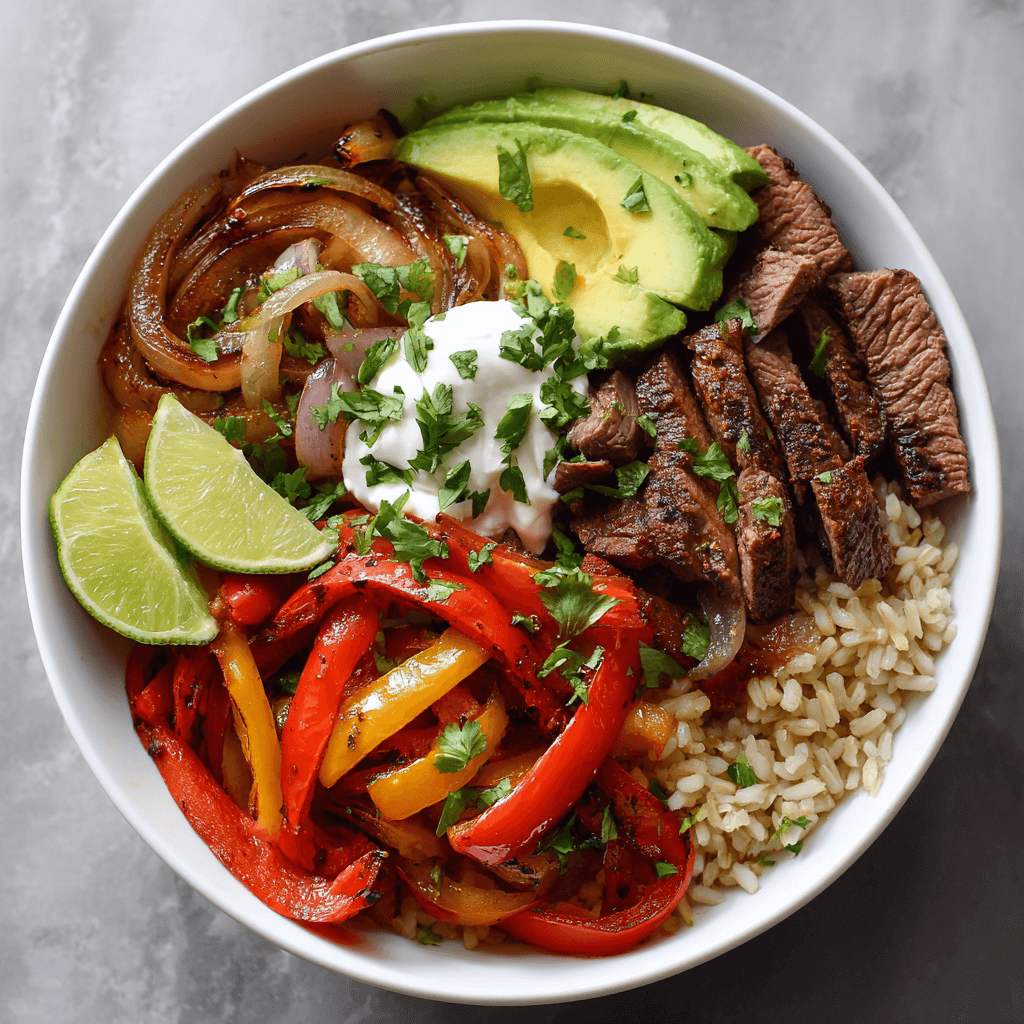
Steak Fajita Power Bowls are a sophisticated deconstruction of the classic fajita, optimized for nutrient density and texture.1 Unlike traditional fajitas served in tortillas, the “power bowl” format allows for a base of complex carbohydrates—like quinoa or cilantro-lime rice—which absorbs the savory juices from the seared steak.
The technical secret to this dish is the high-heat sear and the grain-against-cut slicing method. By using a cast-iron skillet and slicing the steak perpendicular to the muscle fibers, you ensure the meat is both charred on the outside and incredibly tender on the inside.
Ingredients
The Steak and Marinade
- 700g Flank Steak or Skirt Steak.
- 3 Tablespoons Olive Oil.
- 2 Tablespoons Fresh Lime Juice.
- 3 Cloves Garlic: Minced.
- 1 Teaspoon Ground Cumin.
- 1 Teaspoon Smoked Paprika.
- 1/2 Teaspoon Chili Powder.
- Salt and Black Pepper: To taste.
The Fajita Vegetables
- 2 Large Bell Peppers: (Red and Yellow), sliced into strips.
- 1 Large Red Onion: Sliced into wedges.
- 1 Tablespoon Neutral Oil.
The Bowl Base and Toppings
- Cooked Base: 400g Cilantro-lime rice or Quinoa.
- Protein Add-ins: 1 can (400g) Black beans, rinsed and warmed.
- Fresh Elements: 1 Avocado (sliced), cherry tomatoes, and fresh cilantro.
- The Dressing: Sour cream or a Greek yogurt lime crema.
Instructions
1. Marinate the Protein
In a large bowl or resealable bag, combine the olive oil, lime juice, garlic, cumin, paprika, and chili powder. Add the steak, ensuring it is fully coated. Marinate for at least 30 minutes at room temperature or up to 4 hours in the refrigerator. The lime juice acts as a chemical tenderizer, breaking down the tough fibers of the flank steak.2
2. Prepare the Base
While the steak marinates, prepare your base of choice (rice or quinoa). Fluff with a fork and stir in fresh lime zest and chopped cilantro to mirror the flavors of the marinade.
3. Sear the Steak
Heat a cast-iron skillet over high heat until it is smoking slightly. Remove the steak from the marinade and pat it dry (moisture prevents a good sear). Sear the steak for 4 to 5 minutes per side for medium-rare. Remove the steak to a cutting board and let it rest for 10 minutes. This resting period allows the juices to redistribute through the meat.
4. Char the Vegetables
In the same skillet (don’t wash it—the leftover steak juices add flavor), add a tablespoon of oil and the peppers and onions. Sauté over high heat for 5 to 7 minutes until they are tender-crisp and have charred, blackened edges.
5. Assemble the Power Bowls
Divide the base into four bowls. Add a portion of black beans and the charred vegetables. Slice the rested steak against the grain into thin strips and place on top.
6. Final Flourish
Add the avocado slices, cherry tomatoes, and a generous dollop of sour cream or lime crema. Garnish with extra cilantro and a squeeze of fresh lime.
Flavor & Texture Notes
The primary sensation is smoky acidity. The smoked paprika and cumin provide an earthy depth that is immediately cut by the vibrant lime juice, while the charred peppers offer a caramelized sweetness.
The texture is a balance of creamy and crisp. The velvety avocado and crema contrast with the snappy bell peppers and the hearty, chewy bite of the steak.
Tips & Variations
- The Grain Rule: Always look at the steak to see which way the muscle fibers are running. Slice perpendicular to these lines. If you slice parallel to the grain, the steak will be chewy and difficult to eat.
- Low-Carb Version: Swap the rice or quinoa for a bed of shredded Romaine lettuce or cauliflower rice.
- Sheet Pan Method: If cooking for a crowd, you can toss the steak and vegetables on a large sheet pan and broil on high for 10–12 minutes for a hands-off version.
Storage & Maintenance
- Refrigeration: Store the components (steak/veggies, base, and toppings) in separate compartments of a meal-prep container for up to 4 days.
- Reheating: Reheat the steak and vegetables briefly in a pan or microwave. Avoid reheating the avocado or fresh greens, as they will wilt and lose flavor.
- Freezing: The cooked steak and beans freeze well for up to 2 months, but the fresh vegetables are best eaten immediately after cooking.
FAQ
Which steak is better: Flank or Skirt?
Skirt steak has more fat and a more intense “beefy” flavor but is thinner. Flank steak is leaner and thicker. Both work excellently, but skirt steak will cook faster.
Why is my steak tough?
This is usually due to skipping the marinade, overcooking past medium-well, or failing to slice against the grain. Aim for an internal temperature of 57°C (135°F) for the best results.
Can I make the crema ahead of time?
Yes. A simple mix of 100g Greek yogurt, 1 tablespoon lime juice, and a pinch of salt can be kept in the fridge for up to a week and used as a versatile dressing.
Conclusion
Steak Fajita Power Bowls are a reliable, high-performance meal that emphasizes the importance of proper meat preparation and flavor balancing. By utilizing a high-heat sear and a citrus-forward marinade, you create a dish that is consistently vibrant and satisfying.