Follow Me On Social Media!
5-Ingredient Peanut Butter Oatmeal Chocolate Chip Cookies.

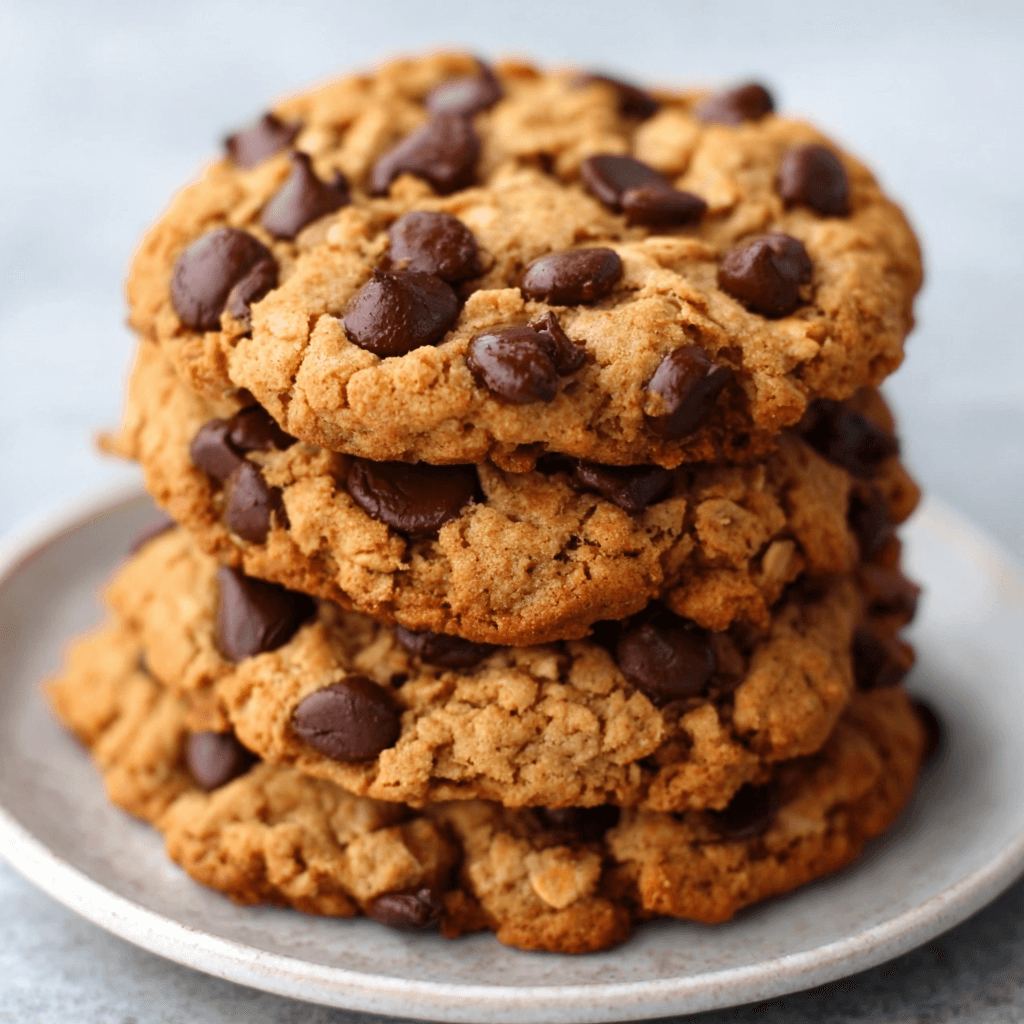
Finding a reliable cookie recipe that doesn’t require a pantry full of specialized ingredients is a bit like finding a favorite pair of jeans—once you have it, you stick with it for years. These peanut butter oatmeal chocolate chip cookies are exactly that. They rely on just five basic staples, skip the flour entirely, and come together in one bowl.
I first started making these during a busy week when I realized I was out of butter and flour but still wanted something sweet after dinner. Most “healthier” cookies end up tasting like dry cardboard or dense energy bars, but these surprised me. They have a chewy, almost fudge-like center with crisp edges, and the saltiness of the peanut butter perfectly balances the sweetness of the chocolate chips.
Whether you are looking for a quick snack for the kids, a pre-workout boost, or just a simple dessert that won’t leave your kitchen covered in flour, this recipe is a reliable staple. It’s naturally gluten-free (provided you use certified oats) and doesn’t use refined white sugar, relying instead on the natural fats and proteins in the peanut butter to provide structure and flavor.
Ingredients
To get the best results, use high-quality versions of these five items. Since there are so few ingredients, the flavor of each one really stands out.
- Peanut Butter: 1 cup of creamy or crunchy peanut butter. If you use a natural variety (the kind you have to stir), make sure it is well-mixed and not too oily.
- Coconut Sugar or Brown Sugar: 2/3 cup. Coconut sugar provides a deep, caramel-like flavor, while brown sugar adds more moisture and chewiness.
- Large Egg: 1 egg, room temperature. This acts as the binder that holds the oats and peanut butter together.
- Rolled Oats: 1 ½ cups. Old-fashioned rolled oats provide the best texture. Avoid steel-cut oats (too hard) or instant oats (which make the cookies mushy).
- Dark Chocolate Chips: ½ cup. Aim for 60% cacao or higher for a rich flavor that isn’t overly sugary.
Instructions
The beauty of this recipe is its simplicity. You don’t need a stand mixer or any complicated equipment—just a sturdy spatula and a large mixing bowl.
Prep your workspace
Start by preheating your oven to 350°F (175°C). Line a large baking sheet with parchment paper or a silicone baking mat. This is a crucial step because peanut butter cookies can be a bit tacky before they cool, and the lining prevents sticking.
Mix the base
In your large bowl, combine the peanut butter and the sugar. Stir them together until the mixture looks smooth and the sugar is fully incorporated. Add the egg and stir vigorously. You will notice the texture change; as the egg emulsifies with the fats in the peanut butter, the dough will become thick, shiny, and pull away from the sides of the bowl.
Fold in the texture
Add the rolled oats to the peanut butter mixture. Use your spatula to fold them in until every oat is coated. Finally, pour in the chocolate chips and give it one last stir. The dough will be quite thick and heavy, which is normal.
Scoop and shape
Using a tablespoon or a small cookie scoop, portion out the dough into balls about the size of a golf ball. Place them on the prepared baking sheet, leaving about two inches of space between each one. These cookies don’t spread much on their own, so use the back of a fork or your palm to gently press them down into a thick disc shape.
Bake to perfection
Slide the tray into the center rack of the oven. Bake for 10 to 12 minutes. You are looking for the edges to be just slightly golden brown. The centers might still look a little soft or “underdone,” but that’s okay. They will firm up as they cool on the hot baking sheet.
Cooling is key
Let the cookies rest on the baking sheet for at least 10 minutes before moving them. If you try to pick them up right out of the oven, they will likely crumble. Once they have set, move them to a wire rack to cool completely.
Flavor and Texture Notes
These cookies occupy a unique space between a traditional cookie and a high-protein snack bar. Because there is no flour, the texture is remarkably dense and chewy. The oats provide a rustic, hearty bite that contrasts with the creamy richness of the peanut butter.
The flavor profile is dominated by the roasted nuttiness of the peanut butter, which is why choosing a brand you love is so important. The dark chocolate chips provide little pockets of bitterness that cut through the richness. If you use coconut sugar, you’ll notice a subtle hint of toasted marshmallow or molasses. It’s a grounded, earthy sweetness rather than a sharp, sugary spike.
Tips and Variations
While this recipe is excellent in its simplest form, it’s also a great canvas for experimentation.
- Nut Butter Alternatives: If you have a peanut allergy, almond butter or cashew butter works beautifully. Just ensure the consistency is thick; very runny nut butters may require an extra tablespoon or two of oats to help the dough hold its shape.
- The Salt Factor: If your peanut butter is unsalted, add a half-teaspoon of sea salt to the dough. A sprinkle of flaky salt on top right after baking also elevates the flavor significantly.
- Mix-ins: Replace half the chocolate chips with raisins, dried cranberries, or chopped walnuts.
- Vegan Option: You can replace the egg with a “flax egg” (1 tablespoon ground flaxseed meal mixed with 3 tablespoons water, let sit for 5 minutes). The cookies will be slightly more fragile but still delicious.
- Spices: A teaspoon of cinnamon or a dash of nutmeg added with the oats can give these a warm, autumnal feel.
Storage and Make-Ahead
These cookies store exceptionally well, making them great for meal prep or lunchbox treats.
- At Room Temperature: Keep them in an airtight container for up to 5 days. They actually stay quite moist because of the fat content in the peanut butter.
- In the Freezer: These are very freezer-friendly. Once cooled, place them in a freezer bag with parchment paper between layers. They will stay fresh for up to 3 months. You can even eat them straight from the freezer for a cold, chewy treat.
- Dough Prep: You can scoop the raw dough into balls and freeze them on a tray. Once frozen solid, transfer to a bag. When you’re ready to eat, just bake them from frozen, adding an extra 2 minutes to the baking time.
Serving Suggestions
These aren’t just “dessert” cookies; they are filling enough to be eaten at various times of the day.
- Breakfast on the Go: Pair two cookies with a piece of fruit for a quick morning meal that has plenty of fiber and protein.
- The Yogurt Bowl: Crumble a cookie over a bowl of Greek yogurt and berries for a deconstructed parfait.
- Afternoon Tea: They are sturdy enough to be dipped into coffee or tea without immediately falling apart.
- Ice Cream Sandwiches: For a more “indulgent” (though we’re avoiding that word) treat, place a scoop of vanilla bean or banana “nice cream” between two cookies and press them together.
FAQ
Can I use quick oats instead of rolled oats?
You can, but the texture will be different. Quick oats are thinner and more processed, so the cookies will be softer and less chewy. They might also turn out a bit drier since quick oats absorb moisture faster than rolled oats.
My cookies crumbled when I tried to eat them. What happened?
This usually happens for one of two reasons: either the cookies were moved before they were fully cooled, or the peanut butter used was very dry. Remember that these rely on the egg and the peanut butter oils for structure. If your peanut butter was from the bottom of a jar and felt “crumbly” to begin with, the cookies will reflect that.
How do I make these cookies more crisp?
Because there is no butter or white sugar, these cookies are naturally more on the chewy/soft side. To get a crisper edge, you can leave them in the oven for an extra 2 minutes, but watch them closely—peanut butter can burn quickly.
Is there a sugar substitute I can use?
You can use a granulated monk fruit sweetener or erythritol if you are watching your sugar intake. However, avoid liquid sweeteners like honey or maple syrup as a 1:1 replacement for the sugar in this specific recipe, as the extra moisture will make the dough too runny to hold its shape.
Conclusion
There is something deeply satisfying about a recipe that requires so little effort but delivers such consistent results. These 5-ingredient peanut butter oatmeal cookies prove that you don’t need a long list of ingredients to create something that feels like a real treat. They are honest, simple, and adaptable to whatever you have in your kitchen.
Next time you’re craving a homemade snack but don’t want to deal with a sink full of dishes, give these a try. You might find that they become your new go-to for bake sales, road trips, or quiet evenings at home.
Would you like me to help you create a shopping list for these ingredients or perhaps adjust the measurements for a larger batch?