
Follow Me On Social Media!
Garden Vegetable Soup with Lemon and Garlic.

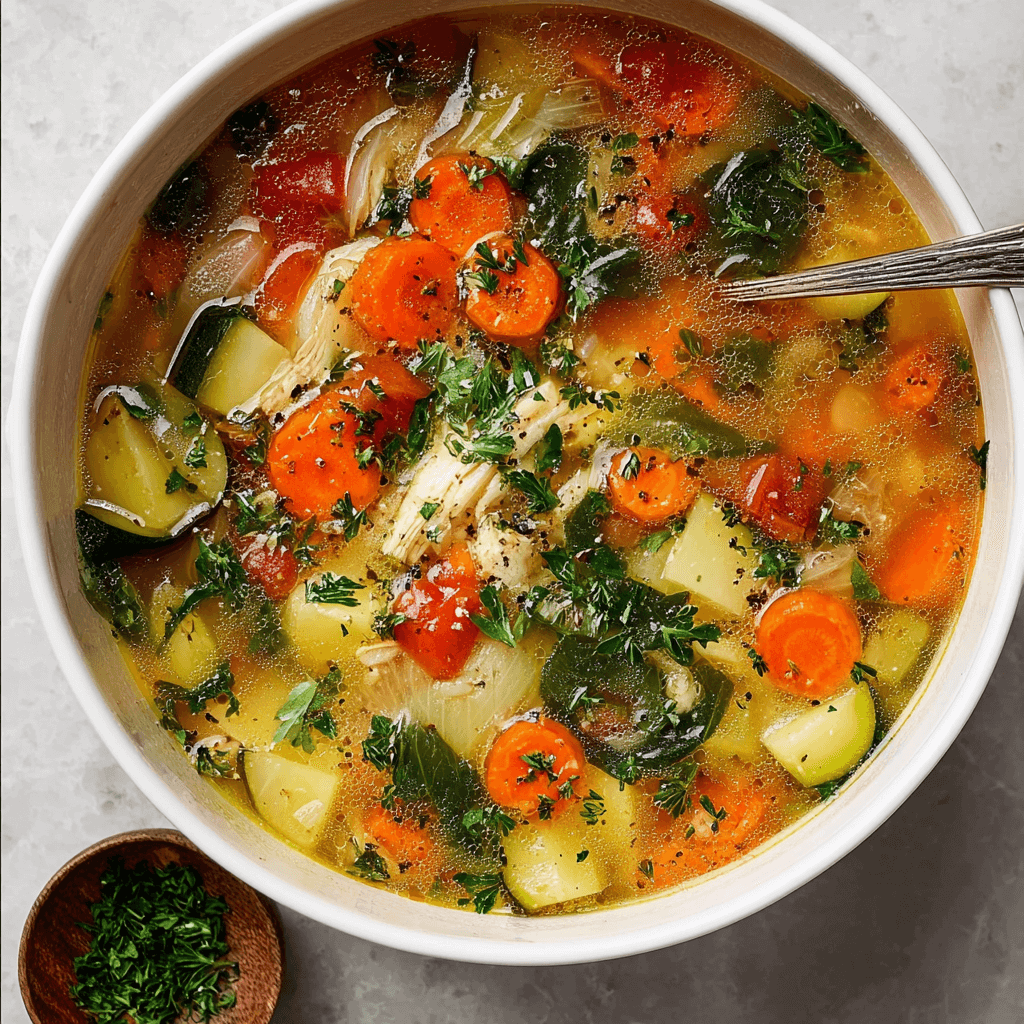
There is a specific kind of comfort that only a pot of vegetable soup can provide. It isn’t the heavy, cream-laden richness of a chowder, but rather a clean, restorative warmth that feels like a reset button for your system. This isn’t the bland, mushy canned soup of childhood; this is a vibrant, textured, and deeply aromatic version that celebrates the humble power of fresh produce.
The beauty of a great vegetable soup lies in the “soffritto”—the foundational aromatic base of onions, carrots, and celery.1By taking the time to properly sweat these down, you build a depth of flavor that carries through to the very last spoonful. This recipe focuses on keeping the vegetables bright and tender-crisp rather than overcooked, finished with a hit of fresh lemon and garlic to ensure every bowl tastes light and energized.2+1
Ingredients
This recipe yields about six servings and relies on a mix of hearty roots and tender greens.
- Aromatics: 1 large yellow onion, 3 medium carrots, and 2 stalks of celery, all diced into uniform pieces.
- Garlic: 4 cloves, minced.3 We add this later in the sauté process to prevent burning.
- Potatoes: 2 medium Yukon Gold potatoes, peeled and cubed. These provide a natural creaminess without needing dairy.
- Zucchini: 2 medium, sliced into half-moons.
- Green Beans: 1 cup, trimmed and cut into 1-inch pieces.
- Diced Tomatoes: 1 can (14.5 oz) of fire-roasted tomatoes for a subtle smoky depth.
- Vegetable Broth: 6 to 8 cups of high-quality stock or bone broth.
- Greens: 2 cups of chopped kale or baby spinach.
- Herbs: 1 tablespoon of chopped fresh thyme (or 1 teaspoon dried) and 2 bay leaves.
- Acid: The juice of half a lemon, added at the very end.
- Olive Oil: 2 tablespoons for sautéing.
- Salt and Black Pepper: To taste.
Instructions
Building the Flavor Base
Heat the olive oil in a large heavy-bottomed pot or Dutch oven over medium heat. Add the onion, carrots, and celery. Sauté these for about 8 to 10 minutes. You aren’t looking to brown them deeply; you want them to become soft, translucent, and fragrant. This slow cook releases the natural sugars in the vegetables, which is the secret to a broth that doesn’t taste like plain water.
Adding the Aromatics and Roots
Stir in the minced garlic, thyme, and a generous pinch of salt and pepper. Cook for just 60 seconds until the garlic smells incredible. Add the cubed potatoes and the canned tomatoes (with their juices). Stir everything together so the potatoes are coated in the herb and tomato mixture.
The Simmer
Pour in the vegetable broth and add the bay leaves. Increase the heat to bring the soup to a boil, then immediately reduce it to a low simmer. Cover the pot partially with a lid and let it cook for about 15 minutes. At this point, the potatoes should be just starting to soften.
Finishing with Tender Veggies
Add the green beans and zucchini to the pot. These vegetables cook much faster than potatoes, so adding them now ensures they stay vibrant and hold their shape. Simmer for another 10 minutes. Finally, stir in the kale or spinach. The residual heat of the soup will wilt the greens in about 2 minutes.
The Final Touch
Turn off the heat. Remove the bay leaves. Squeeze in the fresh lemon juice and stir. Taste the broth—this is the moment to add a bit more salt or a crack of black pepper if needed. The lemon juice acts as a flavor “highlighter,” making all the vegetable notes pop.
Flavor and Texture Notes
The first thing you will notice is the clarity of the broth. It is light and savory, infused with the earthy notes of thyme and the sweetness of the mirepoix. Because we used Yukon Gold potatoes, the broth has a slightly “silky” mouthfeel where the starch has naturally thickened the liquid.
The vegetables offer a variety of textures: the potatoes are buttery and soft, the green beans provide a slight “snap,” and the zucchini is tender. It feels like a garden in a bowl—clean, bright, and incredibly refreshing despite being a hot soup.
Tips and Variations
A vegetable soup is essentially a template for whatever you have on hand.
- The Protein Boost: Add a can of rinsed cannellini beans or chickpeas during the final 10 minutes of simmering for extra heartiness and fiber.
- The Parmesan Trick: If you aren’t vegan, save your old Parmesan rinds in the freezer. Toss one into the broth while it simmers; it adds an incredible savory “umami” depth that mimics a long-simmered meat stock.
- Grain Addition: Stir in a cup of cooked pearl barley or ditalini pasta at the very end. Avoid cooking the pasta in the soup if you plan on having leftovers, as the noodles will soak up all the broth overnight.
- Pesto Swirl: For a Mediterranean twist, dollop a spoonful of basil pesto into each bowl before serving.
Storage and Make-Ahead
Vegetable soup is notorious for being even better the next day. As it sits, the herbs and garlic continue to infuse the liquid.
- Refrigeration: Store in an airtight container for up to 5 days.4
- Freezing: This soup freezes beautifully. Let it cool completely before transferring to freezer-safe bags or containers. It will stay fresh for up to 3 months. When reheating, you may need to add a splash of water or broth, as the potatoes tend to absorb some liquid over time.
- Reheating: Warm it gently on the stovetop over medium-low heat. Avoid boiling it vigorously a second time, as this can make the more delicate vegetables (like zucchini) break down.
Serving Suggestions
While a bowl of this is a meal in itself, it pairs perfectly with:
- Crusty Bread: A thick slice of toasted sourdough rubbed with a raw garlic clove.
- Grilled Cheese: A sharp cheddar or gruyère grilled cheese sandwich is the ultimate partner for vegetable soup.
- Simple Grain: Serve the soup over a scoop of quinoa or brown rice for a more filling, “stew-like” experience.
FAQ
Why is my vegetable soup bland?
Blandness usually comes down to two things: lack of salt or lack of acid. Salt brings out the flavors of the vegetables, and acid (the lemon juice) brightens the entire profile. Try adding a tiny bit more of both before you give up on the pot!
Can I use a slow cooker?
Yes. Add all ingredients except the zucchini, green beans, greens, and lemon juice to the slow cooker. Cook on low for 6–8 hours. Add the tender vegetables and greens in the last 30 minutes of cooking.
Do I have to peel the potatoes?
If you are using thin-skinned potatoes like Yukon Gold or Red Bliss, you can leave the skins on for extra nutrients and texture. If using Russets, it is best to peel them as the skins can become tough and leathery in soup.
How do I keep the vegetables from getting mushy?
The secret is the staggered cooking times. Don’t throw everything in at once. Potatoes take the longest, followed by beans and zucchini, then leafy greens. Following this order keeps everything at its ideal texture.
What can I use instead of lemon juice?
A teaspoon of apple cider vinegar or red wine vinegar provides a similar acidic lift if you don’t have fresh lemons on hand.
Conclusion
This Garden Vegetable Soup is a testament to the fact that simplicity often produces the most rewarding results. It is a humble dish, yet it feels luxurious because of the freshness and the care taken in the sautéing process. Whether you are feeling under the weather or just want a light, nourishing dinner, this pot of soup is a reliable friend to have in the kitchen.