Follow Me On Social Media!
Oven-Baked Tasmanian Salmon with Crisp Asparagus.

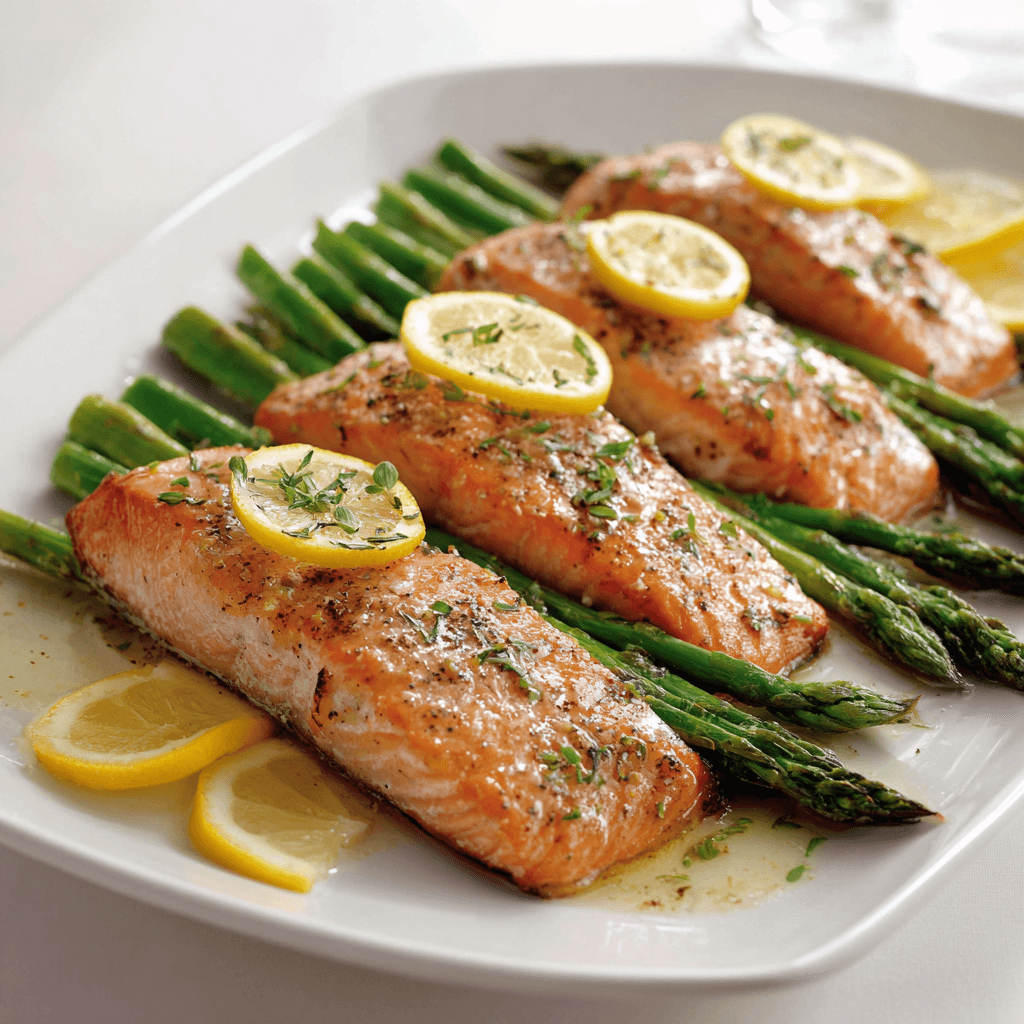
Tasmanian salmon is widely regarded as some of the finest in the world, prized for its high oil content, vibrant orange hue, and exceptionally clean flavor. Because the quality of the fish is so high, the best way to prepare it is with restraint. This recipe focuses on a “one-pan” roasting technique that allows the salmon to stay succulent while the asparagus spears become tender and slightly charred at the tips.
I find that this specific preparation is the ultimate solution for a busy weeknight when you still want a meal that feels sophisticated. By using a bright, citrus-based marinade, you enhance the natural richness of the Tasmanian fish without masking it. It is an honest, nutrient-dense recipe that requires less than ten minutes of active prep time, making it a reliable staple for anyone looking to bring a taste of the Australian coast to their dinner table.
Ingredients
The Main Components
- 2 Tasmanian Salmon Fillets: Approximately 180g–200g each, skin-on.
- 1 Large Bunch of Asparagus: Trimmed (woody ends removed).
- 1 Tablespoon Extra Virgin Olive Oil.
The Lemon-Garlic Marinade
- 2 Tablespoons Unsalted Butter: Melted.
- 1 Tablespoon Fresh Lemon Juice.
- 2 Cloves Garlic: Minced or grated.
- 1/2 Teaspoon Sea Salt.
- 1/4 Teaspoon Cracked Black Pepper.
- 1/2 Teaspoon Dried Dill or Thyme.
The Garnish
- Fresh Lemon Slices.
- 1 Teaspoon Capers: Drained (optional, for a salty punch).
Instructions
1. Prepare the Pan
Preheat your oven to 200°C (400°F). Line a large sheet pan with parchment paper or aluminum foil for easy cleanup. Place the trimmed asparagus spears on one side of the pan. Drizzle them with the olive oil and a pinch of salt and pepper, tossing them with your hands to ensure they are evenly coated. Spread them out so they aren’t overlapping.
2. Season the Salmon
Pat the Tasmanian salmon fillets completely dry with a paper towel. This step is essential; moisture on the surface of the fish will cause it to steam rather than roast, preventing a good texture.1 Place the fillets on the other side of the sheet pan.
3. Whisk and Apply the Glaze
In a small bowl, whisk together the melted butter, lemon juice, minced garlic, salt, pepper, and dried herbs. Spoon this mixture generously over the salmon fillets. If there is any glaze left over, drizzle it across the asparagus.
4. The Roast
Place the pan in the center of the oven and bake for 12 to 15 minutes. Tasmanian salmon is best enjoyed when it is still slightly translucent in the very center (medium-rare to medium). The asparagus should be tender-crisp and bright green.
5. Final Touch
Switch the oven to the “Broil” setting for the last 60 seconds if you prefer a slightly crispier top on the salmon and charred tips on the asparagus. Watch it closely to ensure the garlic doesn’t burn.
Flavor & Texture Notes
The primary sensation of this dish is buttery elegance. Tasmanian salmon has a higher fat content than many other varieties, which translates to a silky, melt-in-the-mouth texture.2
The lemon and garlic provide a sharp, acidic contrast that cuts through the richness of the fish, while the asparagus offers a grassy, earthy snap. It is a clean and balanced meal where the individual flavors of the sea and the garden are allowed to shine through.
Tips & Variations
- The Citrus Switch: If you find lemon too sharp, try using Meyer lemon or even orange zest for a sweeter, more floral profile.
- Added Crunch: Sprinkle a tablespoon of sliced almonds or panko breadcrumbs over the salmon before baking for a textural contrast.
- Pesto Version: Swap the butter glaze for two tablespoons of high-quality basil pesto spread over the fillets.
- Whole Pan Meal: Add half a cup of cherry tomatoes to the pan; they will burst in the oven and create a natural “sauce” for the fish.
Storage & Make-Ahead
- Refrigeration: Cooked salmon can be stored in an airtight container for up to 2 days.
- The “Cold” Serving: Leftover Tasmanian salmon is actually delicious when served cold over a bed of greens the following day.
- Reheating: If you must reheat, do so gently in a 150°C (300°F) oven covered with foil to prevent the fish from becoming dry and rubbery.3
FAQ
Do I need to remove the skin?
No, I recommend keeping the skin on during baking. It acts as a natural barrier that keeps the flesh moist. If you don’t like eating the skin, it will slide off easily with a spatula once the fish is cooked.
How do I know the salmon is done?
The most reliable method is to press the top of the fillet gently with a fork. If the flesh flakes easily along the natural white lines (the fat deposits), it is ready. You can also use a meat thermometer to aim for an internal temperature of 52°C (125°F).4
Why is my asparagus mushy?
Asparagus thickness varies wildly. Very thin spears may only need 8–10 minutes. If you have “pencil” asparagus, wait to add it to the pan until the salmon has already been baking for 5 minutes.
Conclusion
Baked Tasmanian salmon with asparagus is a masterclass in simplicity. By using a single pan and a few bright aromatics, you can highlight the premium quality of the fish while ensuring the vegetables are cooked to perfection. It is a foolproof, healthy recipe that brings a sense of calm to the kitchen.