Follow Me On Social Media!
Pineapple Coconut Celebration Cake – Soft, Tropical & Festive.

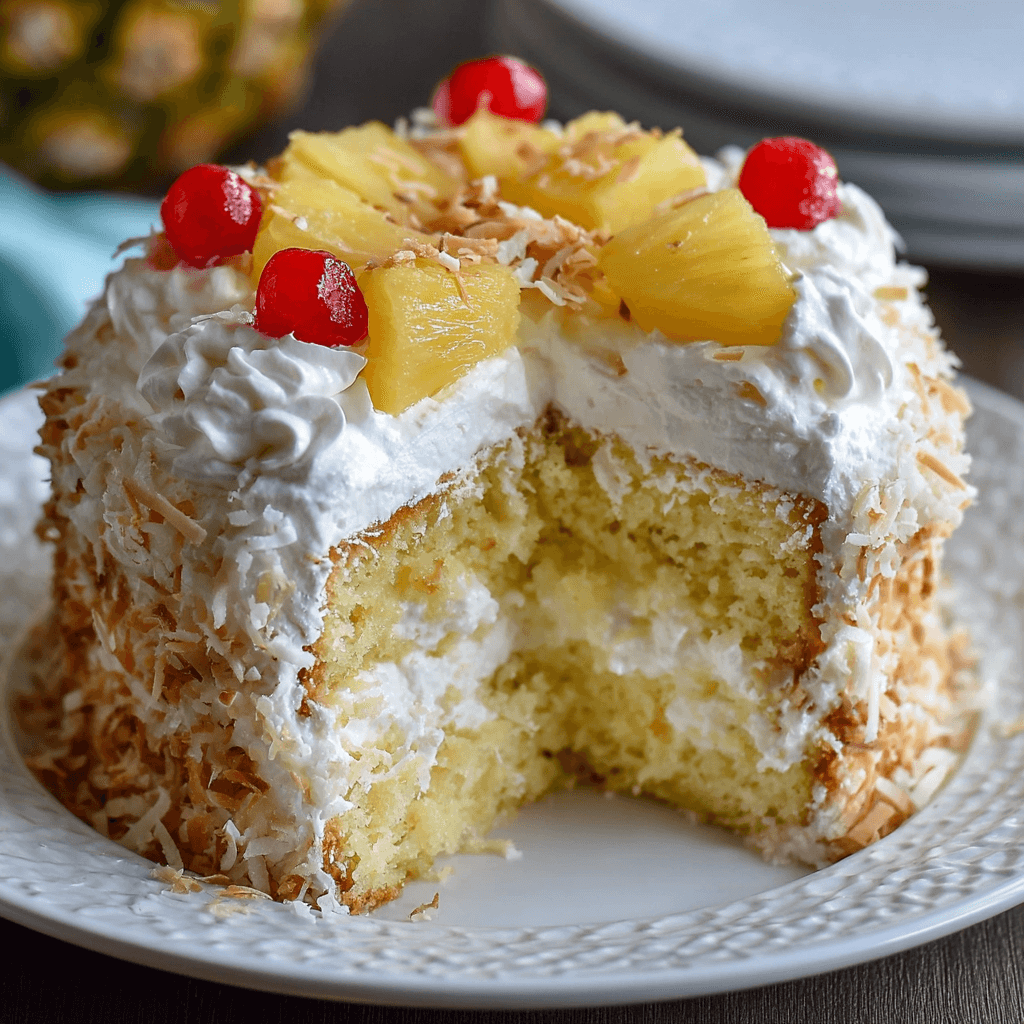
My aunt used to make a pineapple cake every summer for family gatherings, and the combination of tropical flavors always made those afternoons feel special. Years later, when I wanted to recreate that memory, I added coconut and cream cheese frosting to create something even more celebratory. This cake has become my signature dessert for birthdays, graduations, and any occasion that calls for something bright, tropical, and genuinely impressive.
This pineapple coconut celebration cake delivers layers of moist, tender vanilla cake infused with crushed pineapple and coconut, covered in fluffy cream cheese frosting, and topped with toasted coconut. The pineapple keeps the cake incredibly moist and adds natural sweetness, while the coconut provides texture and tropical flavor throughout. The cream cheese frosting balances the sweetness and adds tangy richness that ties everything together.
What makes this cake special is how it tastes both familiar and exotic. It’s approachable enough that everyone loves it, but interesting enough to stand out from typical celebration cakes. It looks impressive with its coconut coating, but the technique is straightforward and forgiving for bakers of all levels.
Ingredients
For the Cake:
- 2 1/2 cups all-purpose flour
- 2 1/2 teaspoons baking powder
- 1/2 teaspoon baking soda
- 1/2 teaspoon salt
- 1 cup (2 sticks) unsalted butter, softened
- 1 3/4 cups granulated sugar
- 4 large eggs, room temperature
- 1 tablespoon vanilla extract
- 1 teaspoon coconut extract (optional but recommended)
- 1 cup buttermilk, room temperature
- 1 cup crushed pineapple, drained well (reserve juice)
- 1 cup sweetened shredded coconut
For the Cream Cheese Frosting:
- 16 ounces (2 packages) cream cheese, softened
- 1 cup (2 sticks) unsalted butter, softened
- 5-6 cups powdered sugar, sifted
- 2 teaspoons vanilla extract
- 3-4 tablespoons reserved pineapple juice (or milk)
- Pinch of salt
For Decoration:
- 2 cups sweetened shredded coconut, toasted
- Fresh pineapple wedges (optional)
- Edible flowers (optional)
Instructions
Preheat your oven to 350°F. Grease and flour three 8-inch round cake pans, or line the bottoms with parchment paper circles and grease the sides. Three layers create that impressive celebration cake height.
In a medium bowl, whisk together the flour, baking powder, baking soda, and salt. Set aside. Make sure these dry ingredients are evenly distributed.
In a large bowl or stand mixer, beat the softened butter and sugar together on medium-high speed for 3-4 minutes until light, fluffy, and pale in color. This creaming process is crucial for a tender cake. The mixture should look almost white and have increased in volume.
Add the eggs one at a time, beating well after each addition. Scrape down the sides of the bowl between additions. The mixture should look smooth and emulsified, not curdled. Add the vanilla extract and coconut extract if using.
With the mixer on low speed, add about one-third of the flour mixture, then half the buttermilk. Add another third of the flour, the remaining buttermilk, and finish with the last third of flour. Mix just until each addition is incorporated. Don’t overmix – stop as soon as you don’t see dry streaks.
Drain the crushed pineapple very thoroughly, pressing it in a fine-mesh strainer to remove excess liquid. Reserve 3-4 tablespoons of the juice for the frosting. You want the pineapple as dry as possible to prevent a soggy cake.
Gently fold the drained pineapple and shredded coconut into the batter using a spatula. Mix just until evenly distributed throughout the batter.
Divide the batter evenly among the three prepared pans, smoothing the tops with a spatula. A kitchen scale helps ensure even layers, but eyeballing works too – aim for about 2 cups of batter per pan.
Bake for 25-30 minutes, until a toothpick inserted into the center comes out clean and the cakes spring back when lightly pressed. The tops should be golden and the edges should just start pulling away from the pan sides.
Let the cakes cool in the pans for 10 minutes, then turn them out onto wire racks to cool completely. Don’t frost warm cakes or the frosting will melt and slide off. Complete cooling takes at least 1 hour.
While the cakes cool, make the cream cheese frosting. In a large bowl, beat the softened cream cheese and butter together on medium speed for 2-3 minutes until smooth and fluffy. Both should be at true room temperature – if too cold, the frosting will be lumpy.
Add 3 cups of powdered sugar, one cup at a time, beating on low speed after each addition. Add the vanilla extract, 2 tablespoons of pineapple juice, and a pinch of salt. Beat on low until combined.
Gradually add the remaining powdered sugar until you reach your desired consistency. The frosting should be thick enough to spread without running but soft enough to work with easily. Add more pineapple juice if it’s too thick, or more powdered sugar if too thin.
Before toasting the coconut, spread it on a baking sheet in an even layer. Toast in a 350°F oven for 5-8 minutes, stirring every 2 minutes, until golden brown. Watch carefully – coconut can burn quickly. Let it cool completely.
To assemble, place one cake layer on your serving plate. If the top is very domed, you can level it with a serrated knife for more stability, though it’s not strictly necessary.
Spread about 3/4 cup of frosting evenly over the first layer, reaching all the way to the edges. Place the second layer on top and repeat with another 3/4 cup of frosting. Add the third layer, placing it top-side down so you have a flat surface.
Apply a thin layer of frosting all over the cake – top and sides – to create a crumb coat. This seals in crumbs and makes the final coat smoother. Refrigerate for 20-30 minutes to let this layer set.
Once the crumb coat is firm, apply the remaining frosting generously to the top and sides of the cake. Smooth with a bench scraper or offset spatula for a clean finish, or leave it rustic with swirls.
While the frosting is still soft, press the toasted coconut onto the sides and top of the cake. Use handfuls and gently press it into the frosting. Work over the serving plate or a baking sheet to catch falling coconut.
Garnish the top with fresh pineapple wedges or edible flowers if desired. Refrigerate the cake for at least 30 minutes before slicing to let everything set.
Flavor & Texture Notes
This pineapple coconut celebration cake has an incredibly moist, tender crumb that practically melts on your tongue. The pineapple adds moisture throughout, preventing any dryness, while the buttermilk creates a fine, soft texture. The cake layers are sturdy enough to support frosting and stacking but delicate enough to feel luxurious.
The pineapple flavor is present but not overwhelming – it reads as tropical sweetness rather than distinct fruit chunks. The crushed pineapple adds tiny bits of texture and moisture pockets throughout. The coconut is more pronounced, providing subtle tropical flavor and slight chewiness from the shredded pieces.
The coconut extract, if used, intensifies the tropical profile and makes the cake taste more distinctly like piña colada. Without it, the cake is milder and more versatile. The vanilla provides warm, sweet undertones that round out the tropical flavors.
The cream cheese frosting is tangy, rich, and perfectly balanced against the sweet cake. It’s smooth and creamy without being too heavy, and the touch of pineapple juice adds subtle fruitiness that reinforces the cake’s flavor. The frosting is sweet but the cream cheese’s tanginess prevents it from being cloying.
The toasted coconut coating adds multiple dimensions. It provides textural contrast with its crispy, crunchy flakes against the soft cake and smooth frosting. Toasting brings out the coconut’s natural oils and creates nutty, caramelized notes that add complexity.
Each slice gives you soft, moist cake, creamy tangy frosting, and crunchy sweet coconut. The tropical flavors transport you somewhere sunny and warm, making this cake feel special and celebratory.
Tips & Variations
Use canned crushed pineapple packed in juice (not syrup) for best results. Drain it extremely well – excess liquid will make the cake gummy. Press it in a fine-mesh strainer or squeeze it in cheesecloth.
For extra pineapple flavor, brush each cooled cake layer with 2-3 tablespoons of pineapple juice before frosting. This keeps them moist and intensifies the tropical taste.
Make this as a sheet cake instead of layer cake by baking in a 9×13-inch pan for 35-40 minutes. Frost the top and sprinkle with toasted coconut for easier serving.
Turn this into cupcakes by dividing batter among 24 cupcake liners, filling each about 2/3 full. Bake for 18-22 minutes. Frost and dip the tops in toasted coconut.
Add macadamia nuts or pecans to the batter for extra texture and richness. Chop them finely and fold in with the pineapple and coconut.
Make it more tropical by adding mashed banana to the batter (1/2 cup) or using coconut milk instead of buttermilk. You could also add a layer of pineapple filling between the cake layers.
For a lighter frosting, use whipped cream cheese frosting by folding 1 cup of whipped cream into the finished frosting. It will be softer and more mousse-like.
Make this dairy-free by using vegan butter and dairy-free cream cheese. The texture will be slightly different but still delicious.
Storage & Make-Ahead
This cake stores well due to the moisture from the pineapple and the cream cheese frosting. Keep it covered in the refrigerator for up to 5 days. Let slices sit at room temperature for 15-20 minutes before serving for the best texture and flavor.
The cake layers can be baked ahead and frozen for up to 3 months. Wrap each cooled layer tightly in plastic wrap, then foil. Thaw overnight in the refrigerator before assembling and frosting.
The frosting can be made 2-3 days ahead and refrigerated. Let it come to room temperature and beat briefly to restore the fluffy texture before using.
Assemble and frost the cake up to 2 days before serving. Store covered in the refrigerator. The coconut coating can be pressed on up to 24 hours ahead – it stays crunchy surprisingly well.
Don’t freeze the fully assembled and frosted cake – cream cheese frosting doesn’t freeze perfectly and the coconut coating suffers. Freeze just the unfrosted layers if you need to make ahead.
Leftover cake stays moist and delicious for several days, often tasting even better on day two as the flavors meld together.
Serving Suggestions
This pineapple coconut celebration cake is perfect for birthdays, graduations, summer parties, or any occasion that calls for something festive and impressive. The tropical theme works beautifully for beach-themed parties or outdoor gatherings.
Serve with fresh tropical fruit on the side – mango, passion fruit, or additional pineapple. The fresh fruit echoes the cake’s flavors and adds color to the plate.
Pair with coconut ice cream or vanilla ice cream for an extra indulgent dessert. The cold ice cream against the room-temperature cake is excellent.
For beverages, serve with tropical cocktails like piña coladas, mai tais, or rum punch for adults. For everyone, coconut water, pineapple juice, or tropical fruit punch complement the flavors.
Make it the centerpiece of a dessert table by surrounding it with coordinating treats like coconut macaroons, pineapple upside-down cake squares, or tropical fruit skewers.
Cut smaller slices than you might with other cakes – this is rich and generous portions aren’t necessary. A standard 8-inch three-layer cake serves 12-16 people.
For a stunning presentation, place fresh orchids, hibiscus flowers, or tropical leaves around the base of the cake stand.
FAQ
My cake turned out dense instead of fluffy. What happened? Overmixing the batter after adding flour is the most common cause. Mix just until the flour disappears. Also ensure your baking powder and baking soda are fresh and active. Finally, make sure your eggs and buttermilk were at room temperature – cold ingredients don’t incorporate as well.
The frosting is too soft and won’t stay on the cake. How do I fix it? The butter and cream cheese may have been too warm, or you didn’t add enough powdered sugar. Refrigerate the frosting for 20-30 minutes to firm it up, then beat briefly before using. Add more powdered sugar if needed – up to another cup.
Can I use fresh pineapple instead of canned? Yes, but you’ll need to chop it very finely and squeeze out as much liquid as possible. Fresh pineapple contains enzymes that can affect texture, so canned is actually more reliable for baking. If using fresh, make sure it’s very ripe and sweet.
The coconut keeps falling off the sides. What am I doing wrong? Press the coconut into the frosting while it’s still fresh and soft. Work quickly before the frosting develops a skin. Using more frosting on the sides helps too – you want a generous layer for the coconut to stick to.
Can I make this without coconut? Yes, but you’ll lose the tropical theme. Omit the shredded coconut from the batter and the coating. You could toast sliced almonds instead for the coating. It becomes more of a simple pineapple cake, which is still delicious.
My layers came out uneven thicknesses. Does it matter? It affects appearance but not taste. For more even layers, weigh your batter and divide it equally (about 600g per pan for three 8-inch layers). You can also trim the tops with a serrated knife to level them before frosting.
This pineapple coconut celebration cake brings tropical paradise to any occasion, combining familiar comfort with exciting flavors that make celebrations feel special. The combination of moist pineapple cake, tangy cream cheese frosting, and toasted coconut creates something that looks bakery-quality but is completely achievable at home. Make this once for a special occasion, and it will likely become your signature celebration cake that everyone requests year after year.