Follow Me On Social Media!
Roasted Red Pepper Hummus: A Vibrant and Smoky Classic.

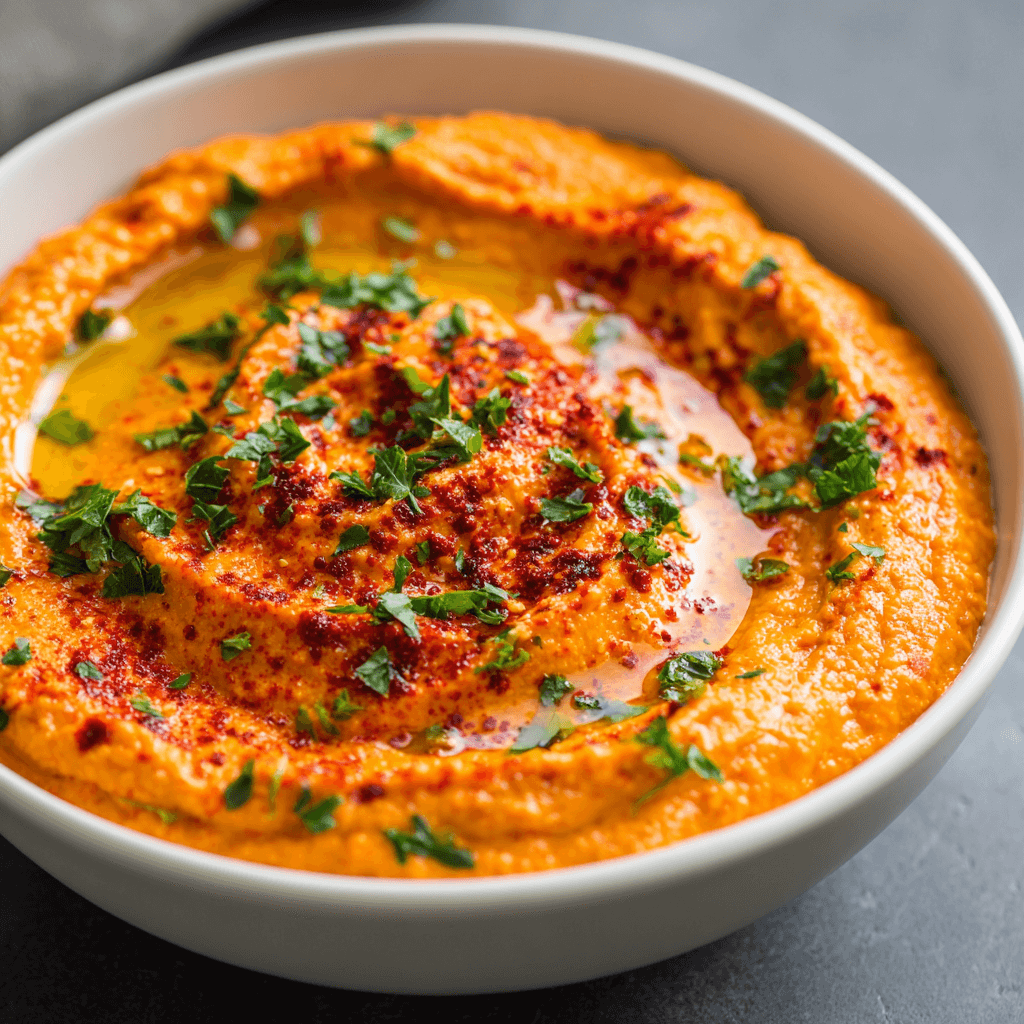
Hummus is a staple of Mediterranean and Middle Eastern tables, celebrated for its creamy texture and earthy base.1While the traditional version is a masterpiece of simplicity, Roasted Red Pepper Hummus adds a layer of sophisticated sweetness and a beautiful sunset hue. It is a dish defined by balance: the nuttiness of tahini, the heartiness of chickpeas, and the charred, smoky depth of peppers blistered over an open flame.2+1
The beauty of this recipe lies in the “from-scratch” approach to the peppers. By roasting them yourself, you capture a smoky aroma that store-bought jars simply cannot replicate. It is a naturally vegan, gluten-free dip that turns a few pantry staples into a vibrant, restaurant-quality spread.3 Whether served as a centerpiece for a crudité platter or slathered inside a warm pita, it is a versatile classic that brings a pop of color and flavor to any meal.4+1
Ingredients
To achieve a “velvet-smooth” consistency, the secret lies in the temperature of the chickpeas and the order in which you blend the ingredients.
- Chickpeas: 1 can (15 oz), drained and rinsed.5
- Red Bell Peppers: 2 large, roasted (or 1 cup jarred roasted peppers, drained).
- Tahini: 1/3 cup (ensure it is well-stirred).
- Lemon Juice: 3 tablespoons, freshly squeezed.
- Garlic: 2 cloves, minced.
- Olive Oil: 2 tablespoons, plus extra for drizzling.
- Ground Cumin: 1/2 teaspoon.6
- Smoked Paprika: 1/2 teaspoon (plus a pinch for garnish).
- Ice Water: 2–3 tablespoons (the secret to aeration).
- Fine Sea Salt: To taste.
Instructions
1. Roast the Peppers
Preheat your oven to 450°F (or use a gas stovetop flame).7 Place whole peppers on a baking sheet and roast for 20–25 minutes, turning occasionally, until the skin is charred and blackened. Immediately place the hot peppers in a bowl and cover with plastic wrap for 10 minutes; the steam will loosen the skins. Peel away the charred skin, remove the seeds, and set the soft flesh aside.
2. Cream the Tahini and Lemon
In a food processor or high-speed blender, combine the tahini and lemon juice. Process for 1 minute, then scrape down the sides and process for another 30 seconds. This “whipping” step aerates the tahini, creating a much lighter, fluffier hummus base.8
3. Add Aromatics and Peppers
Add the olive oil, minced garlic, cumin, smoked paprika, and 1/2 teaspoon of salt to the tahini mixture. Process for 30 seconds. Add the roasted red peppers and blend until the mixture is a vibrant, uniform orange.
4. Incorporate the Chickpeas
Add half of the chickpeas and process for 1 minute. Add the remaining chickpeas and process for another 1–2 minutes until the mixture is thick and mostly smooth.
5. The “Ice Water” Trick
With the processor running, slowly drizzle in the ice water. This causes the fats in the tahini to emulsify and turn the hummus a lighter shade, creating a texture that is exceptionally creamy and light.
6. Final Seasoning
Taste and add more salt or lemon juice if needed. Transfer to a shallow bowl and create a “well” with the back of a spoon.
Flavor and Texture Notes
The first sensation is the smoky-sweetness of the red peppers, which provides a bright contrast to the savory, concentrated nuttiness of the tahini. The texture is incredibly smooth—more like a savory mousse than a chunky bean dip.
Because of the smoked paprika and cumin, there is an underlying earthiness that lingers on the palate. It is a harmonious experience where the acidity of the lemon cuts through the richness of the oil, leaving you with a clean, refreshing finish.
Tips and Variations
- The Skin-Off Secret: For the absolute smoothest hummus, you can peel the thin skins off the chickpeas before blending.9 It’s tedious, but it results in a “silk” texture found in high-end Israeli restaurants.
- Added Heat: Stir in a teaspoon of Harissa paste or a pinch of cayenne pepper for a spicy kick.
- Toasted Topping: Top with toasted pine nuts or whole chickpeas tossed in olive oil and paprika for a professional look and extra crunch.10
- Garlic Variation: Use roasted garlic instead of raw garlic for a milder, sweeter, and less pungent flavor profile.
Storage and Make-Ahead
- Refrigeration: This hummus stays fresh and delicious in an airtight container for up to 5 days. The flavors actually deepen after 24 hours.
- Avoid Freezing: While possible, freezing can cause the tahini to separate and change the texture from creamy to slightly grainy once thawed.
- Serving: If the hummus firms up too much in the fridge, stir in a teaspoon of warm water or olive oil before serving to loosen it back up.
FAQ
Can I use dry chickpeas?
Absolutely. Soak them overnight, then boil them with a teaspoon of baking soda until they are “overcooked” and falling apart. This makes for even creamier hummus than canned versions.
Why is my hummus grainy?
This usually means it wasn’t processed long enough. High-quality hummus requires at least 3–5 minutes of total blending time.
What if I don’t have tahini?
While tahini is traditional, you can substitute with cashew butter or sunflower seed butter for a different but equally creamy result.11
Conclusion
Roasted Red Pepper Hummus is a reminder that the most satisfying appetizers often come from the simplest ingredients treated with care. It is a “pantry-staple” miracle—transforming a can of beans, a jar of sesame paste, and a few peppers into a sophisticated, vibrant feast. Whether you’re looking for a healthy snack or a reliable centerpiece for a Mediterranean platter, this hummus is a reliable, delicious classic.