Follow Me On Social Media!
Roasted Winter Harvest Dinner Bowl.

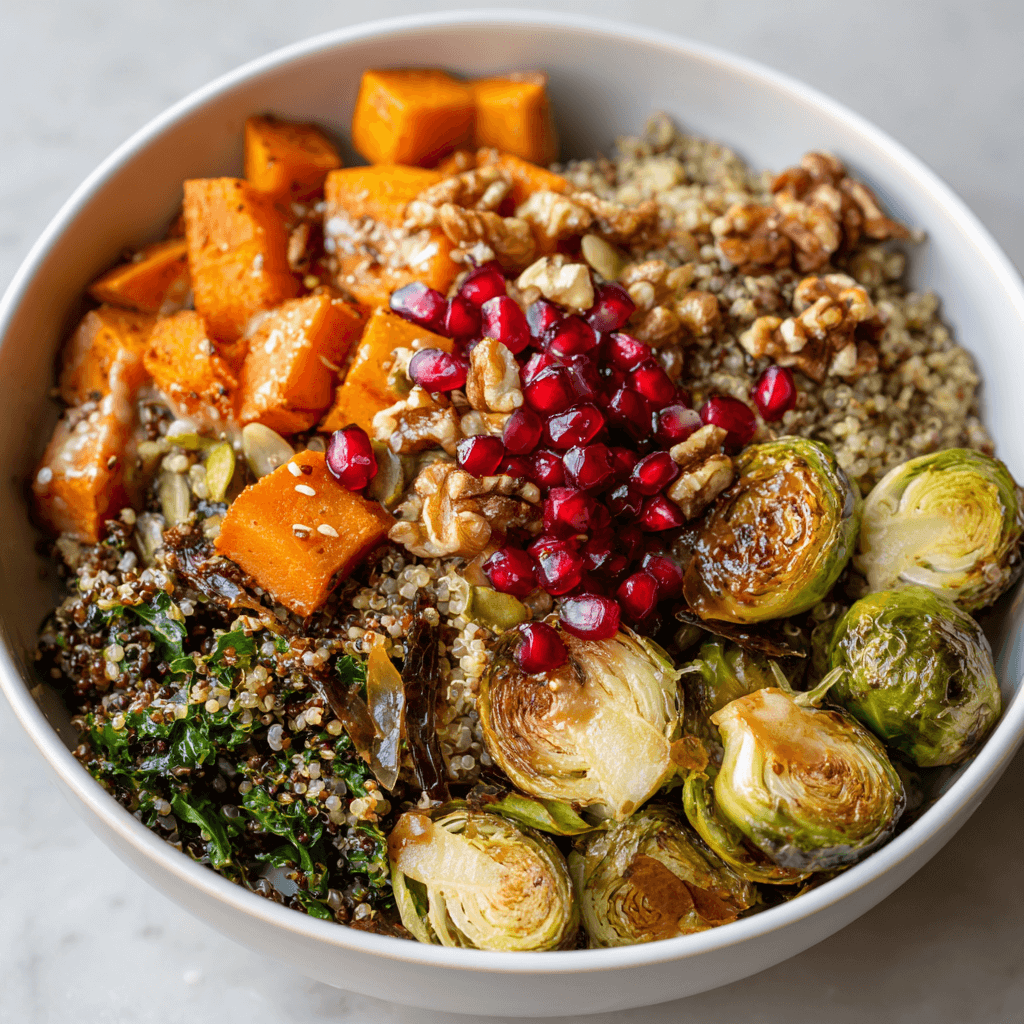
When the temperature drops and the evenings pull in early, our bodies naturally crave something more substantial than a crisp summer salad. However, “substantial” doesn’t have to mean heavy or dull. The Winter Harvest Dinner Bowl is designed to celebrate the quiet vibrance of the colder months, utilizing hardy root vegetables, earthy grains, and a bright, acidic dressing to wake up the palate.
The beauty of a grain bowl lies in its architecture. Instead of a single pile of food, you are creating a map of different temperatures and textures. You have the warmth of roasted squash, the chewy resilience of farro or quinoa, and the fresh snap of raw greens. It is a meal that feels intentional and nourishing, providing a steady release of energy that carries you through the darker months. This recipe is less about strict rules and more about a template for seasonal eating that you can return to week after week.
Ingredients
This bowl is built on a foundation of fiber and plant-based brilliance, though it plays very well with added proteins if you choose.
The Roasted Base
- Butternut Squash: 2 cups, peeled and cubed into bite-sized pieces.
- Brussels Sprouts: 1 pound, trimmed and halved.1
- Red Beets: 2 medium, peeled and diced (these add a stunning jewel tone).
- Olive Oil: 2 tablespoons.
- Maple Syrup: 1 tablespoon (to aid caramelization).
- Sea Salt and Cinnamon: A pinch of each for warmth.
The Grains & Greens
- Cooked Grain: 2 cups (Farro, wild rice, or quinoa all provide excellent structure).
- Kale: 4 cups, stems removed and finely shredded.
- Lemon Juice: 1 tablespoon (to massage into the kale).
The Toppings
- Pomegranate Arils: 1/2 cup for juicy, tart pops of flavor.
- Toasted Walnuts or Pecans: 1/4 cup for essential crunch.
- Goat Cheese or Feta: 1/4 cup, crumbled (omit for vegan).
Maple Tahini Dressing
- Tahini: 1/4 cup.
- Apple Cider Vinegar: 2 tablespoons.
- Maple Syrup: 1 tablespoon.
- Dijon Mustard: 1 teaspoon.
- Warm Water: 2–3 tablespoons (to thin to your preferred consistency).
Instructions
Roasting the Harvest
Preheat your oven to 400°F (200°C). On a large sheet pan, toss the butternut squash, Brussels sprouts, and beets with olive oil, maple syrup, salt, and a dash of cinnamon. Spread them out in a single layer—if the pan is crowded, the vegetables will steam rather than roast. Bake for 25 to 30 minutes, tossing halfway through, until the edges of the sprouts are crispy and the squash is tender and browned.
Prepping the Greens
While the vegetables are in the oven, place your shredded kale in a large bowl. Drizzle with a teaspoon of olive oil and the lemon juice. Use your hands to literally “massage” the kale for about two minutes. You will feel the leaves soften and see them turn a darker, more vibrant green. This step is non-negotiable; it breaks down the tough fibers of the kale, making it much easier to digest and far more pleasant to eat.
Whisking the Dressing
In a small jar or bowl, combine the tahini, apple cider vinegar, maple syrup, and mustard. Whisk until smooth. At first, the tahini might “seize” and become thick, but keep whisking while adding warm water one tablespoon at a time. You are looking for a pourable consistency that looks like heavy cream.
Assembling the Bowls
Start with a generous base of massaged kale in each bowl. Add a scoop of your cooked grains to one side. Arrange the roasted squash, sprouts, and beets over the top. Sprinkle with the toasted nuts, pomegranate arils, and crumbled cheese. Finally, drizzle the maple tahini dressing generously over the entire bowl.
Flavor and Texture Notes
This bowl is a masterclass in seasonal balance. The roasted vegetables offer a caramelized, almost buttery sweetness that is grounded by the earthy, nutty flavor of the grains. The beets provide a deep, soil-grown richness that contrasts beautifully with the sharp, acidic bite of the apple cider vinegar in the dressing.
Texture is where this dish truly succeeds. The kale provides a soft, leafy foundation, while the pomegranate arils act like tiny jewels of liquid tartness that burst when you bite them. The toasted nuts give a necessary woodsy crunch that ties the “harvest” theme together.
Tips and Variations
The Winter Harvest Bowl is a canvas for whatever is currently in your pantry or at the local market.
- Add Protein: This bowl is incredibly satisfying on its own, but it pairs beautifully with a piece of roasted salmon, sliced chicken breast, or a jammy soft-boiled egg.
- Grain Swaps: If you are gluten-free, use quinoa or brown rice. If you want something more “bouncy” and substantial, use pearled farro.
- Nut-Free: Swap the walnuts for toasted pumpkin seeds (pepitas) or sunflower seeds for that same crunch without the allergens.
- Different Veggies: Don’t have squash? Sweet potatoes or carrots work just as well. If you aren’t a fan of beets, try roasted parsnips for a peppery, pale alternative.
Storage and Make-Ahead
This is perhaps the ultimate meal-prep recipe because many of the components actually hold up better over time.
- The Vegetables: Roasted root vegetables can be stored in the fridge for up to 4 days. They can be eaten cold, but they are best if quickly reheated in a dry skillet or air fryer to regain their texture.
- The Kale: Because you massaged the kale, it won’t wilt the way lettuce does. You can actually dress the kale a day in advance, and it will still be delicious.
- The Dressing: Keep the tahini dressing in a separate jar. It may thicken in the fridge, so just stir in a tiny bit of warm water before serving to loosen it up again.
Serving Suggestions
If you are serving this for a dinner party, consider “deconstructed” styling. Place the massaged kale on a large platter and arrange the different roasted vegetables in distinct stripes across the top, finishing with the toppings. This allows guests to scoop exactly what they want.
For a cozy solo dinner, serve this in a deep, wide bowl and pair it with a cup of ginger tea or a crisp glass of dry white wine to cut through the creaminess of the tahini.
FAQ
Why do I have to massage the kale?
Kale contains a tough cellulose structure. Massaging it with an acid (lemon juice) and a little salt manually breaks those bonds. It turns a bitter, tough leaf into something tender and sweet. If you skip this, the bowl will feel more like a chore to chew.
Can I use frozen vegetables?
While you can roast frozen Brussels sprouts or squash, they often contain more moisture and won’t get as crispy as fresh ones. If using frozen, roast them at a slightly higher temperature (425°F) and skip the maple syrup until the last 5 minutes of cooking.
My tahini dressing is bitter. What happened?
Some brands of tahini are more bitter than others, especially if they are made from unhulled seeds. To fix this, add a tiny bit more maple syrup or a pinch of salt. The sweetness and salt will counteract the bitterness of the sesame.
Is farro gluten-free?
No, farro is a type of wheat. If you need a gluten-free option, wild rice or sorghum are wonderful substitutes that offer a similar chewy texture.
How do I get the pomegranate seeds out easily?
The easiest way is to cut the pomegranate in half, hold it cut-side down over a bowl, and whack the back of it firmly with a wooden spoon. The seeds should fall right out into the bowl.
Conclusion
The Winter Harvest Dinner Bowl is a celebration of the season’s resilience. It proves that eating “clean” doesn’t have to mean eating cold or uninspired food. By taking the time to roast, massage, and whisk, you turn humble ingredients into a vibrant, multi-layered meal that feels like a reward at the end of a long day.